


The Supreme Court of Nigeria on Wednesday, April 23, 2026, reserved judgment in the leadership tussles rocking both the Peoples Democratic Party and the African Democratic Congress, plunging Nigeria’s two major opposition parties into deeper uncertainty as the 2027 general elections draw uncomfortably close.
A five-member panel of the apex court, led by Justice Mohammed Garba, fixed no date for judgment after hearing arguments from parties in separate appeals challenging the decisions of lower courts on the disputes.
The development is a severe blow to the organisational capacity of both parties at a moment when time is rapidly running out.
The Independent National Electoral Commission has announced May 10 as the deadline for political parties to submit their membership registers, fixed the Presidential and National Assembly elections for Saturday, January 16, 2027, and the Governorship and State Houses of Assembly elections for Saturday, February 6, 2027. Party primaries, including the resolution of disputes arising from them, are to be conducted between April 23 and May 30, 2026.
Also Read: “Military Force Alone Won’t End Terrorism” — Sheikh Gumi insists on negotiation
With both major opposition parties now entangled in multiple litigations, coupled with the looming INEC deadline, their ability to stabilise and organise a clear schedule of activities has been significantly disrupted leaving aspirants seeking elective positions on PDP and ADC platforms in a state of uncertainty and despair, as the unfolding situation makes it increasingly difficult for them to determine their next line of action.
The PDP Crisis
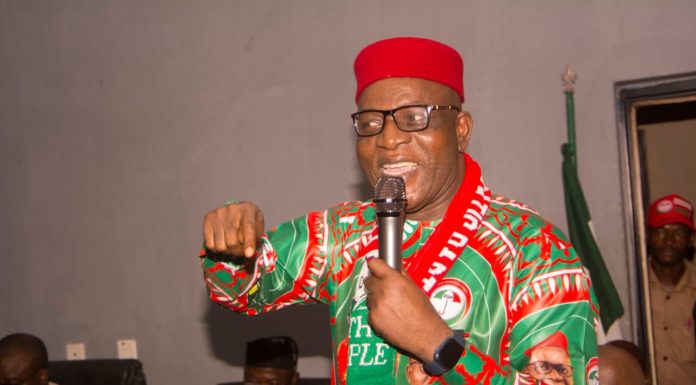
The PDP has remained embroiled in a prolonged internal crisis, resulting in a split into two factions — one led by Tanimu Turaki (SAN) and supported by Oyo State Governor Seyi Makinde and his Bauchi counterpart, Bala Mohammed, and the other headed by Abdulrahman Mohammed with the backing of FCT Minister Nyesom Wike.
The court reserved judgment in two appeals filed by the Turaki-led factional leadership, seeking to validate the party’s national convention held in Ibadan, Oyo State, on November 15 and 16, 2025. The appellants are asking the court to set aside concurrent judgments of the Federal High Court and the Court of Appeal, which nullified the convention on grounds of procedural breaches and internal party violations.
One of the appeals challenged the decision of Justice Peter Lifu, who restrained the PDP from conducting the convention after finding that former Jigawa State Governor Sule Lamido was unjustly denied the opportunity to contest for national chairman. Another arose from the judgment of Justice James Omotosho, which barred the party from proceeding with the exercise on the basis that it failed to conduct valid state congresses as required by law and party guidelines.
Also Read: Otti Appoints Benjamin Kalu’s Wife as Chairman of Abia State University Teaching Hospital Board
Undeterred by the pending judgment, the Wike-backed faction moved swiftly after Wednesday’s hearing, releasing a 2027 primary schedule and fixing the cost of its presidential nomination and expression of interest forms. Presidential aspirants will pay N51 million in total, while governorship aspirants will pay N21 million. The sale of forms is slated to begin April 27 and close May 4, with presidential primaries fixed for May 18 and governorship primaries for May 27.
The Turaki faction dismissed the timetable as worthless. Its National Publicity Secretary, Ini Ememobong, accused the rival camp of acting as though they already knew the court’s verdict, alleging that some of them boast openly that the court is in their pocket.
The ADC Implosion
The ADC’s situation is arguably worse, the party is now split into three competing factions. The dispute stems from disagreements over the tenure of former chairman Ralph Nwosu, who handed over party leadership to a coalition group led by former Senate President David Mark, while sidelining his deputy, Nafiu Gombe, who insisted on assuming the role of acting chairman. A third faction, aligned with the party’s 2023 presidential candidate Dumebi Kachikwu, later announced a caretaker committee following a National Executive Committee meeting convened by some state chairmen on April 7 in Abuja.
On April 1, INEC announced the removal of Mark and National Secretary Rauf Aregbesola from its official register, stating that the action complied with a court order directing it to maintain the status quo pending the final judgment of the trial court.
Also Read: Tinubu Seeks Senate Approval for $516m Loan for Sokoto–Badagry Superhighway
Mark, through his counsel Jubril Okutepa (SAN), challenged a March 12 Court of Appeal judgment, arguing that the dispute bordered on the internal affairs of a political party and was therefore not justiciable, and urged the court to restrain INEC from recognising any leadership outside his faction.
Implications for 2027
The twin crises at the PDP and ADC represent what may be the most serious structural threat to Nigeria’s opposition ahead of a general election since 1999. With INEC’s primaries window closing May 30 and no judgment dates in sight from the Supreme Court, both parties risk being unable to conduct legally valid primaries, field candidates, or even submit membership registers on time.
The Turaki-led PDP faction’s publicity secretary warned that the apex court must deliver judgments that will preserve multiparty democracy and prevent the imminent emergence of a one-party state, charging party members to keep their faith alive in the unwavering hope that the Supreme Court will act as the last hope of Nigerians.
Whether the Supreme Court acts in time to salvage the opposition’s 2027 preparations remains the defining political question hanging over Nigeria’s democracy.
Stay informed and ahead of the curve! Follow The National Concord Blog Newsletter for real-time updates, breaking news, and exclusive content. Don't miss a headline – join now below!