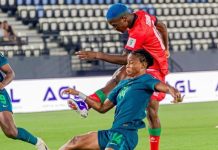



A major cloud of uncertainty has been cast over the upcoming 2026 FIFA World Cup following reports that Iran may withdraw from the global football tournament after recent United States military airstrikes. The development has generated widespread concern among football authorities, players, and fans, as political instability increasingly intersects with international sports. Iran had already secured qualification for the expanded 48-team tournament scheduled to be hosted across the United States, Canada, and Mexico. However, participation has now been placed under serious review due to escalating geopolitical tensions and growing security fears.
According to international reports, Iranian football authorities indicated that participation under current conditions may be difficult to sustain. Statements attributed to the president of the Iranian Football Federation suggested that recent military actions have created an environment where sporting activities are overshadowed by national security concerns. Consequently, domestic football competitions within Iran have reportedly been suspended, reflecting the seriousness of the situation. Analysts have noted that such disruptions often affect logistical preparations, player travel arrangements, and international coordination, all of which are essential for a tournament of global magnitude. As tensions intensified, global football stakeholders were forced to reassess whether sports could remain insulated from political crises.
The crisis followed coordinated airstrikes targeting Iranian leadership and strategic facilities, which significantly escalated hostilities in the region. Reports indicate that retaliatory actions and heightened military alert levels have further complicated diplomatic relations between Iran and Western nations. These developments have raised concerns about visa access, athlete safety, and international travel restrictions, especially because several of Iran’s scheduled matches are expected to take place on United States soil. Observers have argued that the convergence of politics and sports is not unprecedented, yet the scale of this crisis presents unique operational challenges for tournament organizers.
FIFA MONITORS SITUATION AS DECISION LOOMS
Football’s governing body, FIFA, has confirmed that it is closely monitoring developments while maintaining its commitment to ensuring a safe and inclusive tournament. Officials emphasized that no final decision has been made regarding Iran’s participation, stressing that discussions remain ongoing with national associations and host countries. FIFA leadership has reiterated its preference for all qualified teams to compete, highlighting the organization’s long-standing principle of separating sports from political conflict wherever possible. Nevertheless, contingency planning has reportedly begun in case Iran formally withdraws or becomes unable to participate.
Should withdrawal occur, tournament regulations would require FIFA to identify a replacement team based on qualification rankings within the Asian Football Confederation. Speculation has emerged that countries such as the United Arab Emirates or Iraq could potentially be considered, depending on FIFA’s procedural interpretation. Historical precedent exists for such replacements, as governing bodies have previously adjusted tournament lineups during periods of geopolitical upheaval. Experts have emphasized that timing remains critical, since participating nations require adequate preparation periods, travel documentation, and logistical coordination before kickoff.
Meanwhile, uncertainty surrounding visas and diplomatic relations has intensified debate about the feasibility of hosting politically sensitive matches in certain locations. Earlier tensions had already affected Iranian participation in pre-tournament events, including disputes over travel permissions for federation officials. These complications, combined with the present conflict, have contributed to growing speculation that Iran’s involvement may ultimately depend on broader diplomatic negotiations rather than purely sporting considerations.
Beyond administrative concerns, the situation has sparked reactions across the global football community. Fans and analysts have expressed mixed views, with some arguing that sports should remain independent from political disputes, while others believe national security realities cannot be ignored. Online discussions among football supporters highlight widespread uncertainty, with many acknowledging that FIFA faces a delicate balance between maintaining neutrality and ensuring participant safety. The coming weeks are therefore expected to prove decisive as governing authorities evaluate evolving geopolitical risks alongside tournament obligations.
Ultimately, while Iran has not officially withdrawn, its participation remains uncertain as international tensions continue to unfold. The unfolding crisis illustrates how global sporting events increasingly reflect wider geopolitical realities. As preparations for the 2026 World Cup accelerate, stakeholders across football will closely watch diplomatic developments that may determine whether one of Asia’s strongest teams takes its place on football’s biggest stage or becomes the latest example of politics reshaping international sport.
Stay informed and ahead of the curve! Follow The National Concord Blog Newsletter for real-time updates, breaking news, and exclusive content. Don't miss a headline – join now below!