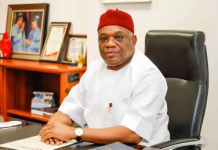



Cost-Cutting Should Not Affect Lawmakers’ Salaries – Senate Spokesman Adaramodu Opposes Part-Time Parliament Proposal
Senate spokesman Yemi Adaramodu has firmly rejected calls for Nigeria to adopt a part-time legislative system, insisting that such a move would undermine the nation’s democracy and should not result in reduced financial allocations to lawmakers.
Speaking during an interview on Channels Television on Friday, Adaramodu dismissed the idea as both impractical and detrimental to effective governance.
“If the parliament is on part-time, then democracy itself is on part-time,There is no thriving democracy that undermines the relevance of its legislature.”he said.
The senator, who represents Ekiti South Senatorial District under the ruling All Progressives Congress (APC), argued that Nigerian lawmakers carry out responsibilities that extend beyond legislative duties. He emphasized their roles in oversight, representation, and community engagement.
“We are not just lawmakers, We carry the burden of our constituents daily attending to their needs, overseeing the executive, and advocating for them, Of the three arms of government, the legislature is the most accessible to Nigerians.” he said.
Highlighting the social expectations placed on members of the National Assembly, Adaramodu noted that legislators are often approached for personal and community support.
“When a baby is born, we are asked to contribute for the naming ceremony. When someone is building a house, they come to us for financial help,” he said. “If the parliament were removed or reduced to part-time status, where would our people turn?”
Challenging the logic behind using cost-cutting as a justification, Adaramodu questioned whether reducing the workload would truly translate into reduced compensation.
“If we move to part-time, would we not still be paid the same? Who determines that? The demand for our services won’t reduce,” he added.
The debate around restructuring Nigeria’s National Assembly to operate on a part-time basis has gained traction in recent months, largely driven by public outcry over high governance costs. However, Adaramodu’s remarks reflect strong institutional resistance to such reform within the legislature.
Stay informed and ahead of the curve! Follow The National Concord Blog Newsletter for real-time updates, breaking news, and exclusive content. Don't miss a headline – join now below!