

A groundbreaking radio and television programme that has become a vital communication link between the Abia State government and its citizens is on the brink of collapse after its founder, Hon. (Barr.) K-M.I Chile, exhausted his personal resources to keep it running.
The “Good Governance Hour,” which airs across multiple broadcasting stations in Abia State, was launched by Bar Chile, the Director General of Dr. Alex Otti Support Group (Abia for Good Governance), to address what he identified as a significant information gap between government activities and public awareness.

A former councilor and Supervisory Councilor for Finance and Economic Planning in Bende Local Government Area, Chile discovered that despite substantial achievements in infrastructure development, policy implementation, economic empowerment, and democratic dividends under the current administration, these accomplishments remained largely unreported to the public.
Programme Becomes Citizens’ Darling
The interactive phone-in programme quickly gained popularity among Abia residents, who embraced the opportunity to engage directly with government officials, ask questions, and contribute solutions to state issues. The initiative has been credited with fostering public support for various government programs, including sanitation drives, health initiatives, infrastructure projects, and the popular “Chupu Dotie – Abia Must Be Clean” campaign.

According to programme listeners and industry observers, the Good Governance Hour provides several critical benefits: it offers official and unofficial insights into government activities, helps citizens understand policies in a relaxed setting, enables informed decision-making, allows independent questioning, and brings governance closer to the people.
Financial Crisis Threatens Continuity
However, the programme’s sustainability has been severely challenged by mounting costs and lack of institutional support. Initially broadcast across multiple television and radio platforms, the programme was eventually restricted to Sun FM Radio Aba due to financial constraints.
In a remarkable display of commitment, Chile reportedly sold personal land to continue funding the programme and avoid humiliation when station operators threatened to cancel broadcasts. The situation worsened when participants began demanding payment to appear, and government officials showed reluctance to participate, treating their appearances as personal favors to Chile rather than public service obligations.

The General Manager of Sun FM Radio Aba recently expressed dismay during the “Melting Point” political programme, questioning why the government and citizens would allow such a valuable platform to die. He praised Bar. Chile for undertaking what many would consider impossible sponsoring a political programme for years without assistance from the very government it serves.
“It’s puzzling why government officials are not ashamed that an individual provided them a platform that helps them do their jobs for free, without even appreciating such a gesture that many of them cannot replicate,” the station manager reportedly said, while questioning what more could serve as a benchmark for loyalty and experience.
Track Record of Public Service
Background investigations reveal Chile as a man with a history of compassionate public service. He reportedly initiated empowerment programmes that governments and political figures across Nigeria have since adopted. Dr. Iheanyi Nwosu, former National Orientation Agency Director General for Abia State, can attest to Chile’s early empowerment initiatives during his tenure as councilor in Uzuakoli.
Chile has also constructed a bus/security post in his Uzuakoli ward, established the Chile Foundation Complex, and helped create a national platform for property agents in Nigeria through the Association of Property Agents of Nigeria (APAN), including publishing “Agency Law & Practice” for distribution nationwide.
Public Appeal for Rescue
Regular listeners and concerned citizens have expressed alarm at the potential demise of the programme, particularly as Abia State approaches critical political decision-making periods. Many argue that allowing such an educational, informative, and enlightening platform to collapse would represent a triumph of apathy over good governance.
The programme’s audience is calling on government officials, promoters, friends, and citizens to urgently intervene to save and expand the “Good Governance Hour,” which many consider more accessible than the monthly governor’s town hall meetings held at restricted venues with selected participants.
As the new year begins, the question remains whether Abia State’s stakeholders will rally to preserve this unique bridge between government and governed, or allow it to become another casualty of institutional indifference.
Stay informed and ahead of the curve! Follow The National Concord Blog Newsletter for real-time updates, breaking news, and exclusive content. Don't miss a headline – join now below!




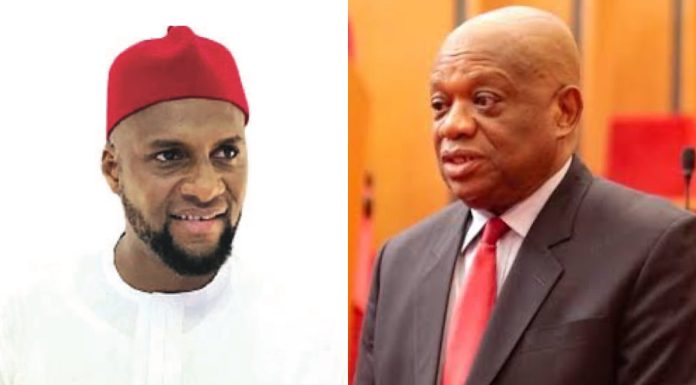



 K-M.I Chile, exhausted his personal resources to keep it running.)