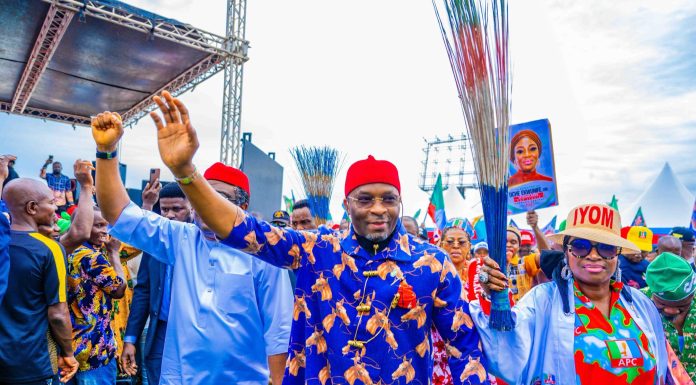



In the theater of democratic governance, representation is not merely an occupational title; it is an active mechanism for societal transformation. As the political landscape begins its inevitable recalibration ahead 2027 General Elections, the stakes have never been higher for the people of the Ikwuano/Umuahia North/South Federal Constituency.
The core question facing the electorate is fundamentally structural: Do we entrust our collective future to a representative who is yet to master the complex labyrinthine corridors of the National Assembly, or do we deploy a tested legislative heavyweight who possesses the institutional network to deliver results from day one?
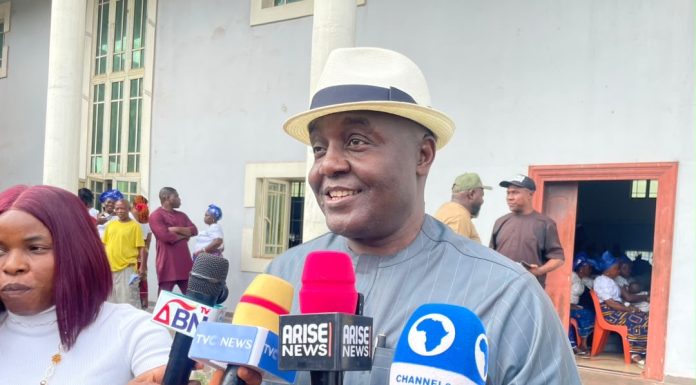
The answer to this question frames the entry of Rt. Hon. Chinedum Orji into the 2027 federal legislative race. His bid is not a fresh experiment in ambition; it is the logical maturation of a public service career defined by high-impact governance, systemic legislative reform, and an uncommon commitment to human capital development.
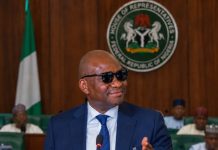
To understand the trajectory of what Rt. Hon. Orji can achieve at the federal level, one must critically analyze his tenure as the Speaker of the Abia State House of Assembly. In the architecture of Nigerian politics, presiding over a state legislature is one of the most rigorous crucibles of leadership. It requires navigating complex political ecosystems, balancing diverse constituency interests, and managing the delicate equilibrium between the executive and legislative arms of government without compromising the independence of the parliament.
Under his stewardship, the Abia State House of Assembly was not a rubber stamp, nor was it an arena of perpetual conflict. Instead, Orji transformed it into a productive policy engine. His leadership style proved that legislative productivity is a direct consequence of stability and strategic consensus-building.
Legislative capital is built on relationships. A former State Speaker enters the federal arena not as an outsider, but as a peer to national power brokers, carrying the institutional respect necessary to secure crucial committee assignments.
The foundational argument for Orji’s 2027 federal bid lies in his documented record of state-level productivity. In legislative governance, intentions are cheap, but enacted policies and visible infrastructure are quantifiable. Orji successfully bridged the gap between raw political influence and practical, everyday utility for his constituents.
During his tenure as a state lawmaker, Orji sponsored and co-sponsored more than 20 bills. These were not cosmetic resolutions; they were targeted pieces of legislation designed to achieve specific socio-economic outcomes: Enacting laws that streamlined local tax structures to attract private investment into Abia State and championing regulatory frameworks that fostered youth inclusion and tech-driven entrepreneurship.
He equally championed creating legal pathways to ensure public funds were tied directly to verifiable community developments.
Beyond the chamber floor, Orji leveraged his political capital to drive tangible socio-economic renewal. He recognized early on that a lawmaker’s secondary duty is to serve as an agent of development. His footprint across the constituency includes:
Youth Empowerment Re-engineered: Moving away from temporary political handouts, Orji focused on structural empowerment—facilitating sustainable employment, funding digital skill acquisition, and providing capital for small-to-medium enterprises (SMEs).
Community Infrastructure: Lobbying and directly funding the rehabilitation of critical township roads, setting up mini-stadiums to engage the youth productively, and upgrading primary healthcare interventions.
Social Safety Nets: Providing targeted support structures for women, widows, and vulnerable groups across the wards of Ikwuano and Umuahia
The transition from a State House of Assembly to the Federal House of Representatives is a significant shift in scale. The National Assembly is an intensely competitive arena where 360 members vie for a finite pool of federal resources, budgetary allocations, and infrastructural projects. In this environment, a constituency’s success depends entirely on the status, capacity, and tactical maneuvers of its representative, and Rt Hon Chinedum Orji has all it takes to deliver on the job
Stay informed and ahead of the curve! Follow The National Concord Blog Newsletter for real-time updates, breaking news, and exclusive content. Don't miss a headline – join now below!