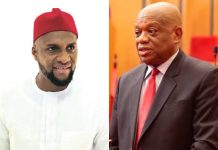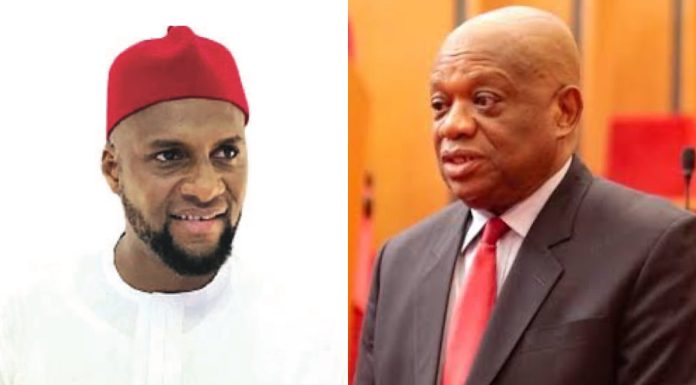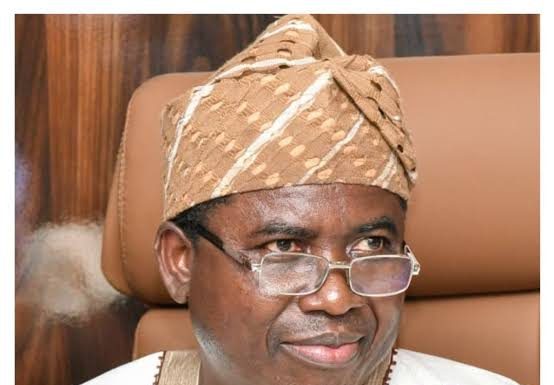



Rt. Hon. Engr. Chinedum Enyinnaya Orji is a Nigerian politician from Abia State whose career has been shaped by his involvement in state-level legislative governance and public administration.
He served as a member of the Abia State House of Assembly and later rose to become Speaker of the House, a position that placed him at the center of legislative activities in the state. During his time in public office, he participated in debates on legislation, oversight of government agencies, and the coordination of the Assembly’s business. His political career has also included active participation in party politics, constituency engagement, and interactions with community organizations, traditional institutions, and professional groups. As with many long-serving public officials, his record has attracted both commendation from supporters and criticism from opponents, making him a prominent figure in Abia’s political landscape.
As Speaker of the Abia State House of Assembly, Orji presided over legislative sessions and worked alongside fellow lawmakers on matters relating to state governance. The office of Speaker carries responsibilities that include managing proceedings of the House, facilitating debate on bills and motions, overseeing legislative committees, and representing the institution in official engagements.
His tenure coincided with a period of significant political activity in the state, during which the Assembly considered legislation on governance, public administration, and development-related issues. .
His leadership style and decisions have been viewed differently by various stakeholders, reflecting the diverse perspectives that often accompany public service. Nevertheless, his years in legislative leadership contributed to his visibility and experience within Abia State politics.
Supporters of Orji frequently point to community-oriented initiatives associated with his public service. These include reports of interventions in areas such as water supply, youth empowerment, educational support, skills acquisition, ICT training, sports development, and assistance for small-scale entrepreneurs. Public discussions have also linked his name to constituency outreach programmes intended to address local needs and encourage community participation. While many of these initiatives have been highlighted by his supporters as evidence of grassroots engagement, assessments of their scale, impact, and long-term sustainability differ among political observers. Such differences are common in evaluating the records of elected officials and underscore the importance of consulting multiple sources when assessing public performance.
Following his tenure as Speaker, Orji remained active in politics and continued participating in party affairs.
He later secured the nomination of the All Progressives Congress (APC) for the House of Representatives seat representing the Ikwuano/Umuahia Federal Constituency. His emergence as the party’s candidate reflected internal party processes and positioned him for another phase of public service at the national level. His supporters have cited his legislative experience and familiarity with government processes as strengths, while political opponents have argued for alternative leadership based on their own priorities and assessments. Such competing viewpoints are characteristic of democratic elections, where candidates present different records, ideas, and visions to the electorate.
Like many experienced politicians, Orji’s public career has generated a broad range of opinions. Supporters describe him as an experienced legislator with strong grassroots connections and an understanding of the legislative process. Critics, on the other hand, have questioned aspects of his political record and policy outcomes.
These differing perspectives illustrate the reality that public service is often evaluated through different political, social, and developmental lenses. Objective assessments therefore benefit from examining legislative records, documented constituency projects, public financial information where available, and reports from credible independent sources alongside statements from both supporters and critics.
Ultimately, the significance of Rt. Hon. Engr. Chinedum Enyinnaya Orji’s political career lies in his contribution to Abia State’s legislative history and his continued participation in the state’s democratic process.
His years in public office have made him a recognizable figure in Abia politics, and his record continues to be discussed by citizens, political analysts, and members of the constituency he seeks to represent. As with every democratic contest, the electorate has the responsibility of evaluating candidates based on verifiable records, policy proposals, leadership qualities, and their vision for the future.
An informed assessment requires careful consideration of evidence from multiple sources rather than relying solely on political endorsements or criticisms.
Stay informed and ahead of the curve! Follow The National Concord Blog Newsletter for real-time updates, breaking news, and exclusive content. Don't miss a headline – join now below!