
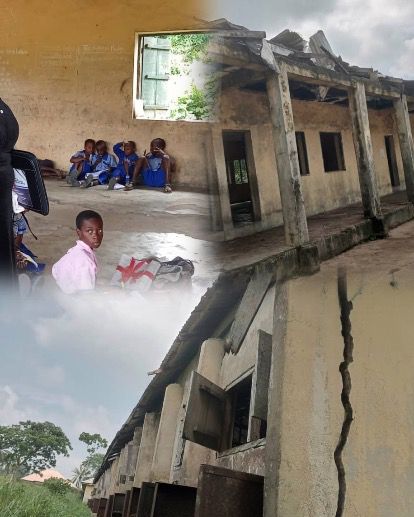
Abia State, Nigeria – In the heart of Abia’s oil-rich Ukwa communities, a profound sense of betrayal festers. The very institutions meant to uplift the next generation, “public schools” stand as stark monuments to governmental neglect, directly contradicting the glowing pronouncements from government house Umuahia.
While the state government trumpets a colossal investment of nearly ₦100 billion in school rehabilitation since 2023, the grim reality on the ground in Ukwa East LGA paints a picture of systemic abandonment, raising urgent questions about accountability and the true beneficiaries of these massive allocations.
A Tale of Two Realities: Government Claims vs. Ground Truth
The Abia State government, under Governor Alex Otti, has repeatedly asserted significant strides in educational infrastructure. Official figures claim ₦54 billion was expended on rehabilitating 51 public schools in the fourth quarter of 2024 alone, contributing to a cumulative spend of close to ₦97 billion since 2023 for new constructions and rehabilitation projects across the state. These are figures that, on paper, suggest a monumental commitment to education.
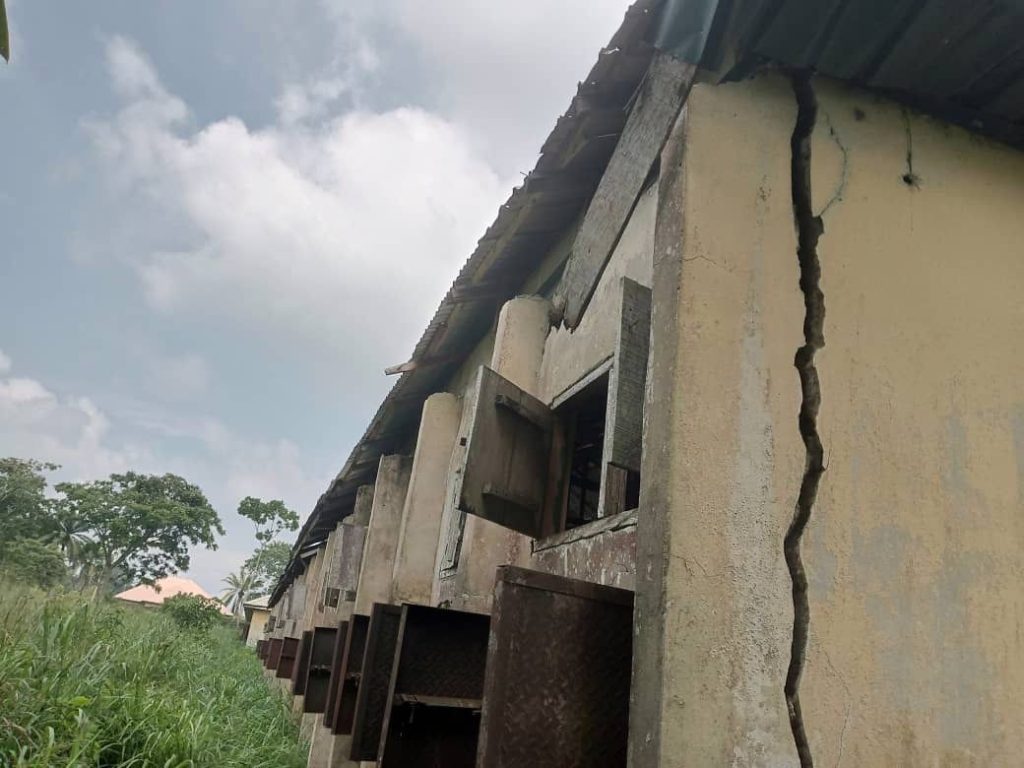
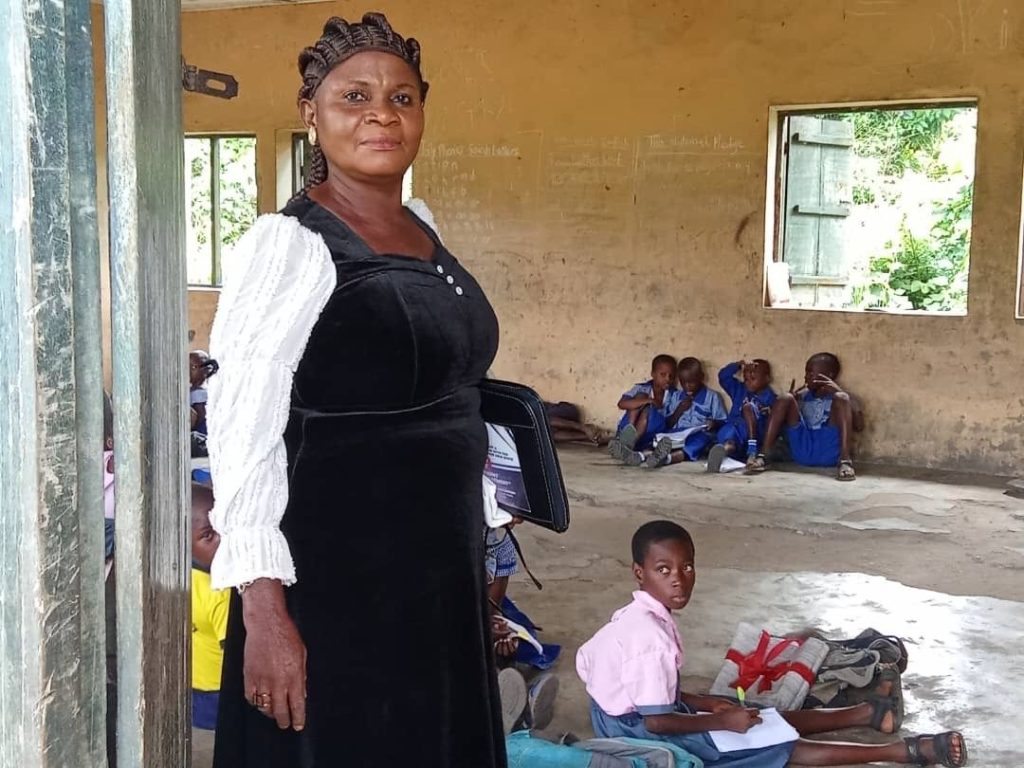
However, a visit to Ukwa communities, particularly Ohanku and Ohuru Ndoki, ironically, the hometown of the Abia State Commissioner for Information and the Ukwa East LGA Chairman reveals a starkly different narrative.
At Ikwuorie Community Primary School II, pupils are not merely learning; they are enduring. Classrooms are roofless, floors are damp and muddy, and basic furniture like desks and chairs are non-existent. Children are forced to sit on the bare, wet ground, while dedicated teachers struggle to impart knowledge in conditions that are, frankly and inhumane.
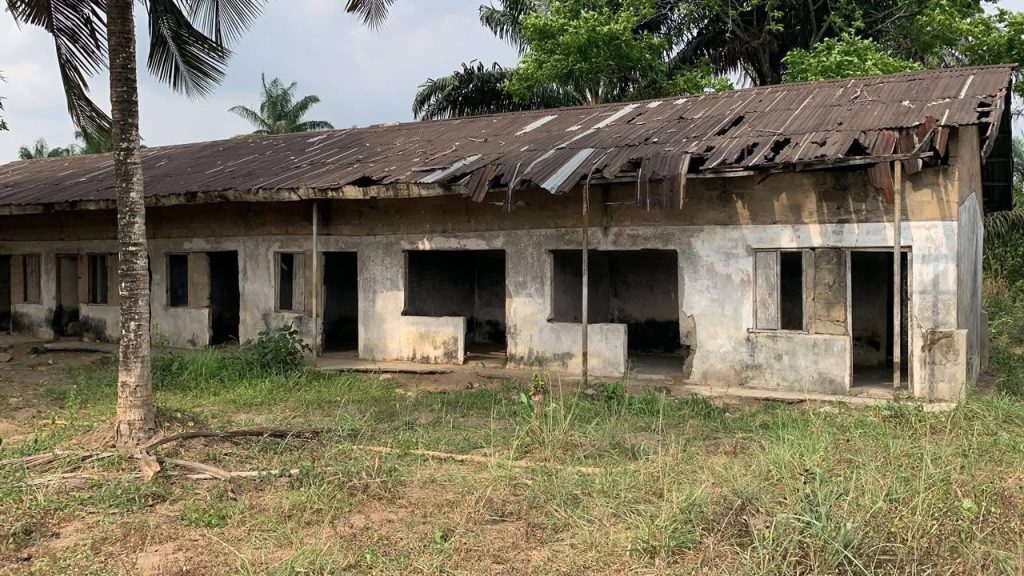
This deplorable situation is not an isolated incident. Comprehensive Secondary School Ohanku, same village of the honourable commissioner for information, Hon Prince Okey Kanu mirrors the decay, with dilapidated structures and leaking roofs.
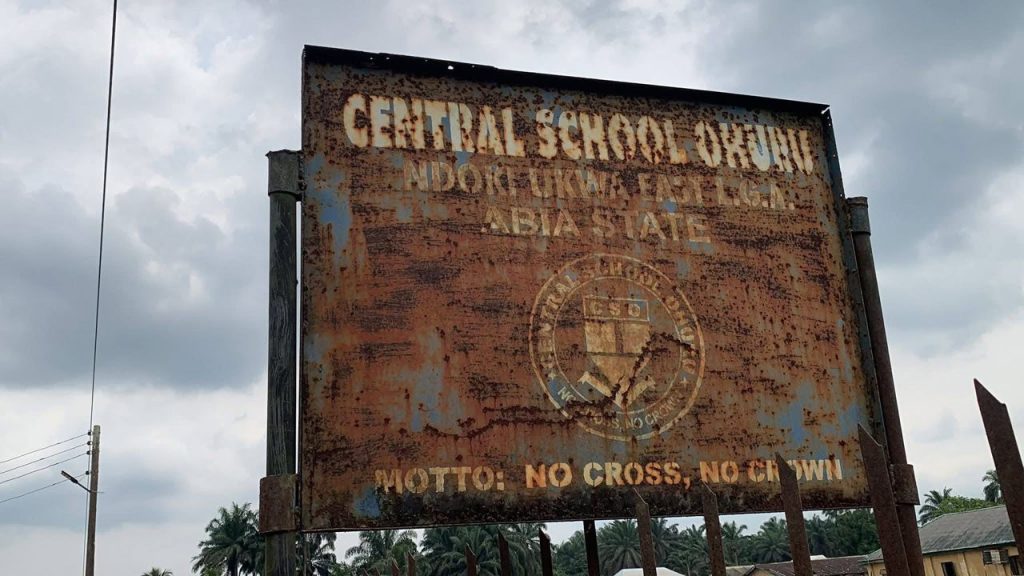
Even more alarming are reports from residents describing Central School Ohuru the village of the current Local Government chairman, Hon. Chibunna Akara as being in an even worse state than its Ohanku counterparts. These are not mere oversights; they are glaring indictments of a system that appears to prioritize rhetoric over reality.
The N54 Billion Question: Where is the Evidence?
The discrepancy between reported expenditure and visible impact is staggering. While the government claims ₦54 billion was spent on school rehabilitation in the last quarter of 2024, Governor Otti himself later dismissed this figure as a
“mistake” saying only ₦2.1 billion was actually spent.
Yet, investigations, referencing official budget documents, indicate that ₦54.066 billion was indeed recorded as spent on rehabilitation/repairs of schools between October and December 2024, with a total of ₦58.323 billion for the entire 2024 fiscal year.
This conflicting information is not just confusing; it is deeply troubling. If ₦54 billion was spent in three months, why do schools in Ukwa remain in such a catastrophic state? Why are children still learning in conditions that would be unacceptable even in emergency shelters?
The question echoes across the communities: Where did the money go?
Adding to the opacity, the Ukwa East Local Government Area is estimated to have received between ₦15 billion and ₦20 billion in federal allocations since 2023. This further amplifies the public outcry, as the visible lack of development in critical sectors like education stands in stark contrast to the substantial funds reportedly flowing into the local government coffers.
A Call for Transparency and Accountability
Education stakeholders, parents, and concerned citizens in Ukwa are no longer content with vague assurances. They demand concrete answers and verifiable actions.
Their calls are clear and unequivocal:
- Publication of Records: The Abia State Government and the Ukwa East LGA leadership must publish clear, detailed, and verifiable records of every school built or rehabilitated, including their locations, the contractors engaged, and the exact funds released for each project.
- Independent Inspections: There is an urgent need for independent inspections of all schools across Ukwa communities to ascertain the true state of infrastructure and to prioritize emergency reconstruction where it is most desperately needed.
This is not merely about statistics; it is about the future of Abia’s children. The tragedy of Abia’s education sector is a long-standing one, with successive administrations accused of allowing public schools to decay.
However, with nearly ₦100 billion reportedly committed to education since 2023, the expectation for tangible change was, and remains, exceptionally high.
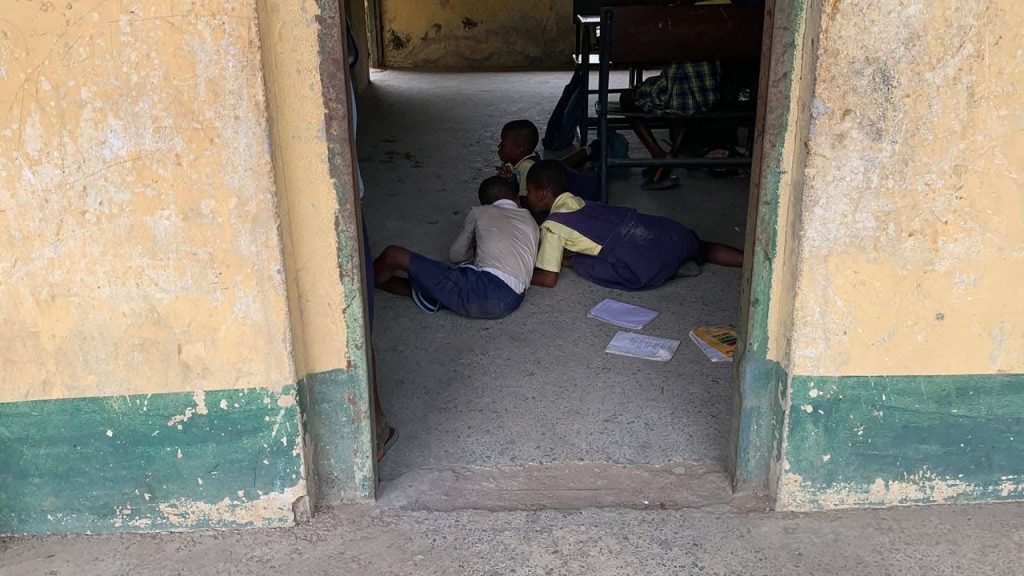
As pupils in Ukwa East continue to brave damp floors and broken roofs, their silent suffering is a loud indictment of governance. The demand from the communities is no longer a plea, but a powerful, collective insistence:
Show the schools.
Show the projects.
Show the evidence.
Because, ultimately, the credibility of Abia’s education reforms, and indeed the very future of Ukwa East’s children, hinges on this transparency and accountability.
Stay informed and ahead of the curve! Follow The National Concord Blog Newsletter for real-time updates, breaking news, and exclusive content. Don't miss a headline – join now below!