

In 1994, in the city of Rosario, Argentina, a boy who was unusually small for his age was diagnosed with a growth hormone deficiency. His family could barely afford the treatment that would allow him to grow. His father worked in a steel factory, his mother took on cleaning jobs to support the household, and his childhood club, Newell’s Old Boys, simply lacked the resources to pay for the expensive hormone injections.
That boy was Lionel Andrés Messi.
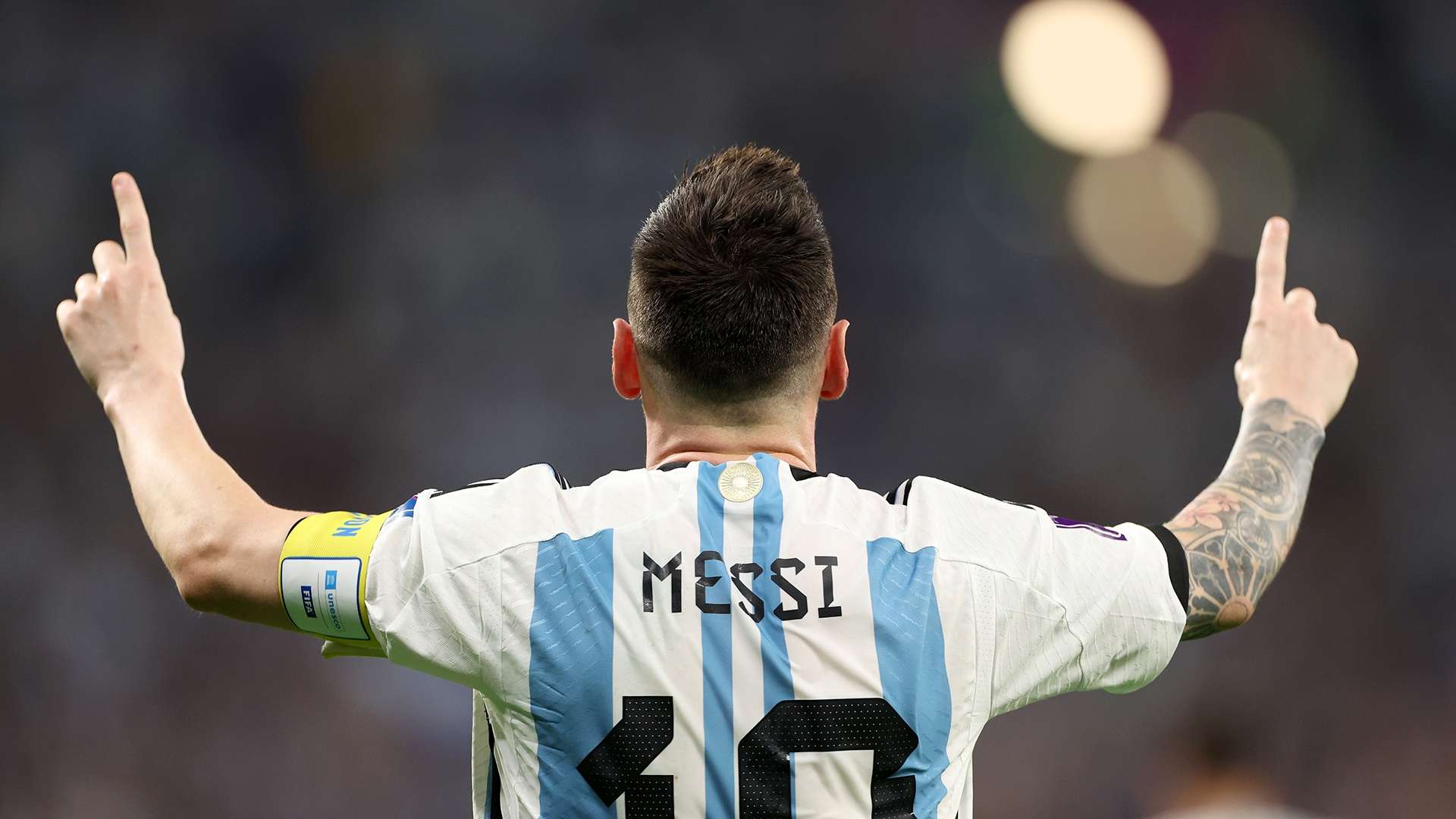
The remarkable journey from a modest home in Rosario to a second FIFA World Cup final against Spain is one of the greatest stories sport has ever produced. It is why millions across the globe regard Messi as more than just a footballer. To many, he is football’s demigod—a once-in-a-generation gift to the sporting world.
Everything changed when Barcelona spotted the teenager during a trial in Spain. Captivated by his extraordinary talent, the Catalan giants reportedly offered him a contract on a paper napkin before agreeing to fund his medical treatment and relocate his entire family to Spain. Messi was only 13 years old.
It would prove to be one of the greatest investments in football history.
Over the next two decades, Messi transformed Barcelona into one of the greatest club sides ever assembled. He won four UEFA Champions League titles, ten La Liga championships, numerous domestic cups, and rewrote virtually every scoring record the club possessed.
He departed Barcelona with more than 670 goals in around 780 appearances, numbers that fundamentally changed expectations of what a footballer could achieve.
His individual honours became equally staggering.
Eight Ballon d’Or awards—the most ever won by any player. Countless Golden Boots. Hundreds of assists. More trophies than any footballer in history.
Yet statistics alone cannot explain Lionel Messi.
Pep Guardiola, arguably football’s greatest modern coach, has long insisted that Messi should never be compared with any other player because he occupies a category entirely of his own.
Xavi Hernández often spoke about how Messi appeared to process football seconds before everyone else, seeing passing lanes and opportunities invisible to ordinary players.
Even Cristiano Ronaldo, his greatest rival throughout one of sport’s most iconic individual competitions, acknowledged that their rivalry elevated both men to extraordinary heights.
For years, however, one achievement remained painfully absent.
The FIFA World Cup.
Argentina reached the 2014 final in Brazil only to lose narrowly to Germany. Despite Messi’s brilliance, critics continued to point to the missing trophy whenever discussions about the greatest footballer of all time emerged.
Then came Qatar.
The 2022 FIFA World Cup became the perfect sporting script.
Messi inspired Argentina with seven goals and three assists, claimed the Golden Ball as the tournament’s outstanding player, and produced one of the greatest individual performances ever witnessed in a World Cup final against France.
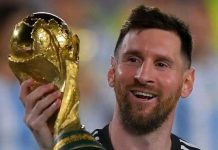
He scored twice during the match, converted his penalty in the shootout, and finally lifted football’s most coveted trophy.
For many observers, the debate ended that night.
Now, at 39 years old, Messi stands on the brink of something almost unimaginable.
A second World Cup.
Argentina have once again reached the final after surviving a dramatic encounter against England. Awaiting them is a brilliant Spanish side that swept aside France to book its own place in the championship match.
The stage could hardly be bigger.
MetLife Stadium.
New Jersey.
The reigning world champions against Europe’s finest.
And once again, Lionel Messi remains the central figure in football’s greatest spectacle.
Should Argentina prevail, Messi would achieve something no modern football legend has managed—captaining his nation to consecutive World Cup triumphs while approaching his 40th birthday.
Yet even if Sunday ends differently, his legacy requires no further validation.
He has already conquered every meaningful summit the sport offers.
From a child whose family struggled to afford medicine to the most decorated footballer in history.
From Rosario’s dusty streets to the pinnacle of world football.
From uncertainty to immortality.
Sunday’s final is not what determines whether Lionel Messi is the greatest footballer of all time.
That verdict has already been written.
The final merely offers the world another opportunity to witness a footballing masterpiece from a player whose career has become one of humanity’s greatest sporting stories.
Some players become legends.
A select few become icons.
Lionel Andrés Messi became something rarer.
A gift to football itself.
Stay informed and ahead of the curve! Follow The National Concord Blog Newsletter for real-time updates, breaking news, and exclusive content. Don't miss a headline – join now below!