

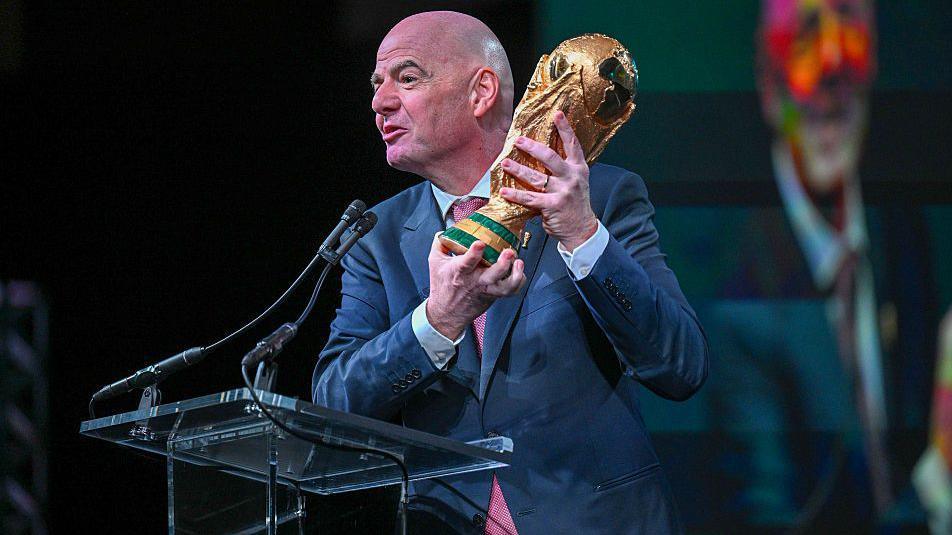
European football’s governing body, UEFA, has threatened to boycott the 2030 FIFA World Cup and all other FIFA competitions if FIFA President Gianni Infantino proceeds with plans to sell stakes in the commercial rights of the World Cup and other major tournaments to private investors.
The decision followed an emergency meeting involving UEFA and its 55 member associations, where officials unanimously rejected the proposed commercial restructuring, describing it as a threat to the integrity and future of world football.
According to UEFA, the World Cup is a global sporting legacy that should never be treated as a financial asset for private investment or shareholder profit.
In a strongly worded statement, UEFA insisted that football belongs to players, supporters, clubs, and national associations—not private investors seeking financial returns. The organisation warned that commercialising ownership interests in FIFA competitions could fundamentally change the governance and values of the game.
The controversy centres on FIFA’s reported proposal to establish a new commercial entity that would manage the commercial rights of the FIFA World Cup and other competitions, with a minority stake offered to private investors. FIFA believes the move could unlock significant new investment and generate additional revenue for the global development of football.
However, UEFA argues that such a model would prioritise investor profits over the long-term interests of the sport and reduce the influence of football’s governing bodies in decisions affecting the game’s future.
The European governing body declared that none of its 55 member associations would participate in FIFA competitions as long as the proposed privatisation plan remains in place.
“Some things in football are too important to sell,” UEFA said, urging FIFA to abandon the proposal entirely and preserve the independence of its competitions.
In response, FIFA defended the proposal, insisting that “nobody is selling football.” The world football governing body said it would retain ultimate ownership and control of its competitions while continuing consultations with stakeholders over the proposed investment structure.
The standoff has created one of the biggest governance disputes in modern football, with concerns that a boycott by UEFA would severely affect the 2030 World Cup, given that many of the world’s strongest football nations belong to the European confederation.
If implemented, the boycott could see football powerhouses such as England, France, Germany, Spain, Italy, Portugal, and the Netherlands withdraw from future FIFA tournaments, dramatically altering the landscape of international football.
The dispute is expected to dominate discussions within global football in the coming months as FIFA continues consultations on the proposed investment plan while UEFA maintains its firm opposition.
Stay informed and ahead of the curve! Follow The National Concord Blog Newsletter for real-time updates, breaking news, and exclusive content. Don't miss a headline – join now below!