



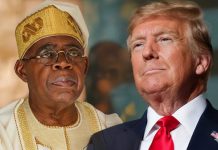
A federal judge in the United States has ordered the Federal Bureau of Investigation (FBI) and the Drug Enforcement Administration (DEA) to release long-sought investigative documents relating to Nigerian President Bola Ahmed Tinubu’s alleged involvement in a drug trafficking and money laundering investigation dating back to the 1990s.
Judge Beryl Howell of the U.S. District Court for the District of Columbia issued the ruling on Tuesday, rejecting efforts by the U.S. government to withhold the documents under the “Glomar response” doctrine, which allows federal agencies to neither confirm nor deny the existence of requested records.
“The claim that the Glomar responses were necessary to protect this information from public disclosure is at this point neither logical nor plausible,” Judge Howell ruled, stating that the agencies had failed to justify the secrecy under the Freedom of Information Act (FOIA).
A Legal Battle for Transparency
The ruling stems from a lawsuit filed in 2023 by transparency advocate and PlainSite.org founder, Aaron Greenspan, who had submitted 12 FOIA requests to U.S. law enforcement and intelligence agencies seeking information on a heroin trafficking investigation allegedly involving Tinubu and associates including Abiodun Agbele, Mueez Akande, and Lee Andrew Edwards.
While the FBI, DEA, IRS, Department of State, Executive Office for U.S. Attorneys (EOUSA), and CIA had all refused to release the records invoking Glomar responses Judge Howell ruled that most of the agencies failed to meet the legal standard for such secrecy.
The CIA, however, successfully defended its refusal, with the court agreeing that confirming or denying its records could pose risks to U.S. national security and compromise intelligence sources.
Unsealed Details from 1993 Forfeiture Case
Key elements of the FOIA requests involve a 1993 civil forfeiture case filed by the U.S. Department of Justice, which sought to seize $460,000 allegedly linked to Bola Tinubu. According to an affidavit by IRS Special Agent Kevin Moss, the funds were suspected to be proceeds from narcotics trafficking.
Moss stated there was “probable cause” to believe Tinubu’s U.S.-based bank accounts had been used for financial transactions connected to a heroin ring operating in the Chicago area. The affidavit also identified links between Tinubu, Akande, and Agbele who was arrested after selling heroin to an undercover DEA agent and later cooperated with investigators.
Tinubu Intervenes
In October 2023, President Tinubu intervened in the case, citing concerns about the release of “confidential tax records” and asserting his right to privacy as a third party. However, Judge Howell dismissed the argument, affirming the overriding public interest.
“The public interest in learning about a sitting president’s possible connection to a major drug investigation is undeniably significant,” Howell wrote.
Next Steps and Implications
Judge Howell directed the FBI, DEA, and other agencies (excluding the CIA) to file a joint report by May 2 outlining the status of remaining issues in the case.
Legal analysts suggest the decision could mark a turning point in a long running saga that resurfaced during Nigeria’s contentious 2023 presidential elections, where questions about Tinubu’s past dominated political discourse. While Nigeria’s election tribunal ultimately upheld his victory, the U.S. court ruling could reignite scrutiny.
Aaron Greenspan welcomed the court’s decision, stating:
“Transparency must prevail over secrecy when it comes to public officials. The American public, as well as Nigerians, deserve to know the truth.”
Background and Broader Context
The Glomar response a legal precedent originating from a CIA case involving the Hughes Glomar Explorer ship is used when agencies argue that acknowledging the existence of records could endanger national security or violate privacy.
The CIA, in its defense, emphasized that disclosing whether records exist on Tinubu could expose intelligence sources or reveal foreign policy interests. Mary C. Williams, the agency’s Litigation Information Review Officer, warned that even confirmation of human source involvement could lead to retaliation and broader security risks.
Nonetheless, the court rejected similar arguments from other agencies, insisting that the FOIA requests pertain to matters of significant public concern, particularly given Tinubu’s position as head of state.
Case Information
- Case Name: Greenspan v. Executive Office for U.S. Attorneys et al.
- Case Number: 1:23-cv-01816-BAH
- Court: U.S. District Court for the District of Columbia
Stay informed and ahead of the curve! Follow The National Concord Blog Newsletter for real-time updates, breaking news, and exclusive content. Don't miss a headline – join now below!












Thanks for sharing. I read many of your blog posts, cool, your blog is very good.
Can you be more specific about the content of your article? After reading it, I still have some doubts. Hope you can help me.