


In a bold move to accelerate rural electrification, the Abia State Government has rolled out a comprehensive mini-grid regulation designed to extend electricity access to unserved and underserved communities across the state.
The announcement was made on Monday following a State Executive Council meeting held at the Government House in Umuahia and presided over by Governor Alex Otti. Speaking to journalists, the Commissioner for Information, Okey Kanu, described the new regulation as a crucial component of the administration’s vision to promote decentralised energy systems through strong private sector involvement.
“This is a vital step toward building a transparent and enabling environment for decentralised energy in Abia,” Kanu stated.
The regulation sets out a clear legal, technical, and commercial framework to guide mini-grid operators and attract private investment in sustainable energy. Kanu noted that the initiative will particularly benefit the northern part of Abia, which has long suffered from poor electricity access.
As part of the rollout, the government will soon inaugurate a 10-member Abia Electricity Advisory Council to advise the governor on key electricity-related policies and reforms.
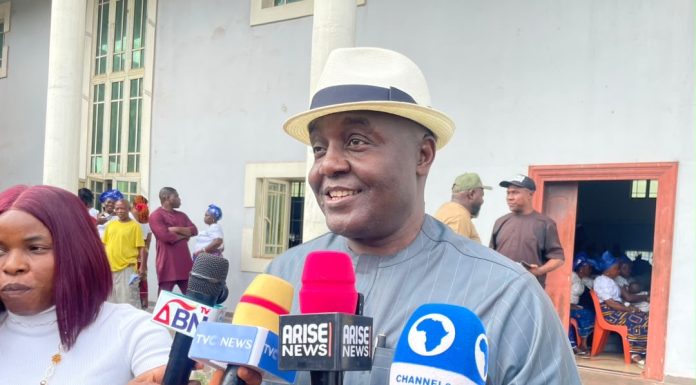
The Commissioner for Power and Public Utilities, Ikechukwu Monday, emphasized that the mini-grids are intended for communities that currently have no access to electricity, not those already connected to the national grid.
“We’re targeting truly unserved areas,” he said. “Government cannot do it alone. We’re calling on private investors and licensed developers to join in, and communities themselves will also be involved.”
He added that mapping and feasibility studies are already underway to identify priority locations for implementation.
Clarifying the vision behind the initiative, Monday explained that this isn’t about simply installing solar panels on rooftops. Instead, it’s about building sustainable energy systems that power entire communities and economic clusters.
Ukoha Njoku, Chief Press Secretary to the Governor, added that mini-grids offer scalable solutions tailored to the specific needs of different areas such as small businesses, cottage industries, and fast-growing neighborhoods.
“Mini-grids don’t replace the national grid,” Njoku said. “They offer flexible, localized alternatives that can grow with the population. If a community needs 2,000 megawatts today, it might need 5,000 tomorrow that’s why we must plan ahead.”
With this policy now in place, Abia State is positioning itself as a leader in renewable energy and inclusive development, opening the door to energy access for thousands of residents who have lived for decades in darkness.
Stay informed and ahead of the curve! Follow The National Concord Blog Newsletter for real-time updates, breaking news, and exclusive content. Don't miss a headline – join now below!