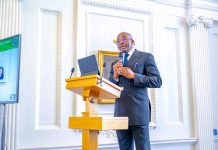



The Federal Government is now leveraging artificial intelligence (AI) to more effectively identify and support impoverished Nigerians living in urban slums, according to Nentawe Yilwatda, Minister of Humanitarian Affairs and Poverty Reduction.
Speaking during an interview on Arise TV’s Prime Time programme on Friday, Yilwatda explained that AI technologies have played a crucial role in expanding and validating the National Social Register, which previously focused only on the rural poor.
“To help someone, you must first know them. You can’t support people you can’t identify,” the minister said.
He revealed that the social register has grown from 13 million to 19.7 million individuals, now including urban communities. This was made possible through the use of satellite imagery, telecom data, and AI-driven analytics to pinpoint slum areas and verify individuals’ socioeconomic status based on mobile usage patterns and access to financial services.
“The president directed us to expand our scope to include the urban poor. We used satellite imagery to locate urban slums, and telecom data to identify active phone users in those areas,” he explained. “AI helped verify identities and cross-reference financial access indicators to compile a more accurate, inclusive register.”
Targeting 75 Million Nigerians
According to the minister, the federal government’s anti-poverty programs are targeting 15 million households—representing an estimated 75 million individuals, based on Nigeria’s average household size of five.
“Out of about 43 million households nationwide, we are focused on 15 million,” he said.
Food Poverty Affects 42% of Nigerians
Yilwatda highlighted that food poverty remains a critical issue, affecting approximately 42% of the Nigerian population—an estimated 80 million people.
“Multidimensional poverty includes factors like access to clean water, healthcare, education, and financial services,” he said. “But food poverty, which is strictly about the ability to get enough to eat, affects nearly half the population.”
To address this, the federal government is rolling out conditional cash transfers targeted specifically at food-insecure households. Each household receives ₦75,000, a sum the minister said can make a meaningful difference in rural communities.
“While ₦75,000 may seem modest in urban settings, our research conducted jointly with the World Bank and civil society groups found that 18% of recipients used the funds to start small businesses. Around 82% improved their household food security, and 52% used the money for school fees.”
Long-Term Structural Solutions
Yilwatda noted that the government’s current poverty reduction strategy is moving beyond short-term humanitarian relief toward more sustainable, long-term solutions.
“Poverty alleviation only eases the pain temporarily. Poverty reduction is about lifting people out of poverty permanently,” he stated.
He added that the government has introduced several structural reforms, including:
• Stabilizing food prices and reducing inflation
• Offering scholarships for students from low-income families
• Providing ₦1.5 trillion in agricultural loans via the Aggregate Bank to support farmers and boost food production
“Previous efforts were largely humanitarian food distribution, relief materials, and cash. But we are now building frameworks that promote real economic empowerment and resilience,” Yilwatda concluded.
Stay informed and ahead of the curve! Follow The National Concord Blog Newsletter for real-time updates, breaking news, and exclusive content. Don't miss a headline – join now below!