

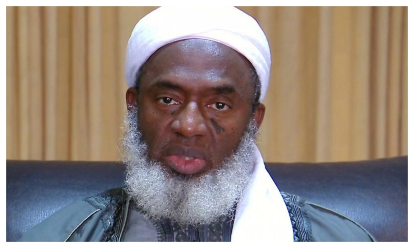
Kaduna-based Islamic scholar, Sheikh Ahmad Gumi, has said Islamic scholars are capable of providing better leadership than professional politicians in Nigeria.
Gumi made the remark while speaking about leadership and governance in the country, arguing that the qualities required for effective leadership are not necessarily found among career politicians.
According to the cleric, religious scholars who possess knowledge, discipline and a strong sense of responsibility could play a greater role in addressing Nigeria’s leadership challenges.
He questioned the dominance of professional politicians in the country’s political system and suggested that Nigerians should broaden their consideration of who is capable of leading the nation.
Gumi maintained that leadership should be based on competence, integrity, knowledge and a genuine commitment to the welfare of citizens rather than political experience alone.
Politicians Have Failed Nigerians
The Islamic scholar’s comments come amid continuing public concerns over governance, economic hardship, insecurity and the performance of political leaders across the country.
He argued that many of the challenges confronting Nigeria require leaders who are driven by service rather than personal political interests.
Gumi suggested that Islamic scholars, because of their exposure to religious teachings and moral principles, could provide a different approach to governance.
He also stressed the importance of leaders possessing the courage to make decisions in the interest of society rather than decisions designed primarily to protect political careers.
Call for Better Leadership
The cleric’s position effectively challenges Nigerians to rethink the traditional route through which political leadership is produced.
Rather than limiting leadership opportunities to professional politicians, he advocated consideration of individuals from other backgrounds who have demonstrated competence, integrity and commitment to public service.
Gumi’s remarks are likely to generate debate, particularly given the longstanding arguments over the role of religious leaders in Nigeria’s political affairs.
Supporters of greater participation by religious and community leaders may view the suggestion as an opportunity to introduce stronger moral standards into governance.
Critics, however, could argue that religious knowledge alone does not necessarily translate into the administrative, economic and institutional expertise required to govern a complex country such as Nigeria.
Leadership Beyond Politics
Nigeria has historically produced political leaders from diverse professional backgrounds, including military officers, lawyers, academics, businessmen, religious figures and civil servants.
Gumi’s argument therefore adds to a broader national conversation about what qualities Nigerians should prioritise when choosing their leaders.
At the heart of the debate is whether political leadership should continue to be dominated by career politicians or whether competent individuals from other sectors of society should be encouraged to participate more actively in governance.
For Gumi, the answer appears to lie in giving greater consideration to Islamic scholars and other individuals whose leadership credentials are built around knowledge, morality and service.
His comments are expected to fuel further discussion about the future of political leadership in Nigeria and the qualities citizens should demand from those seeking public office.
Stay informed and ahead of the curve! Follow The National Concord Blog Newsletter for real-time updates, breaking news, and exclusive content. Don't miss a headline – join now below!