


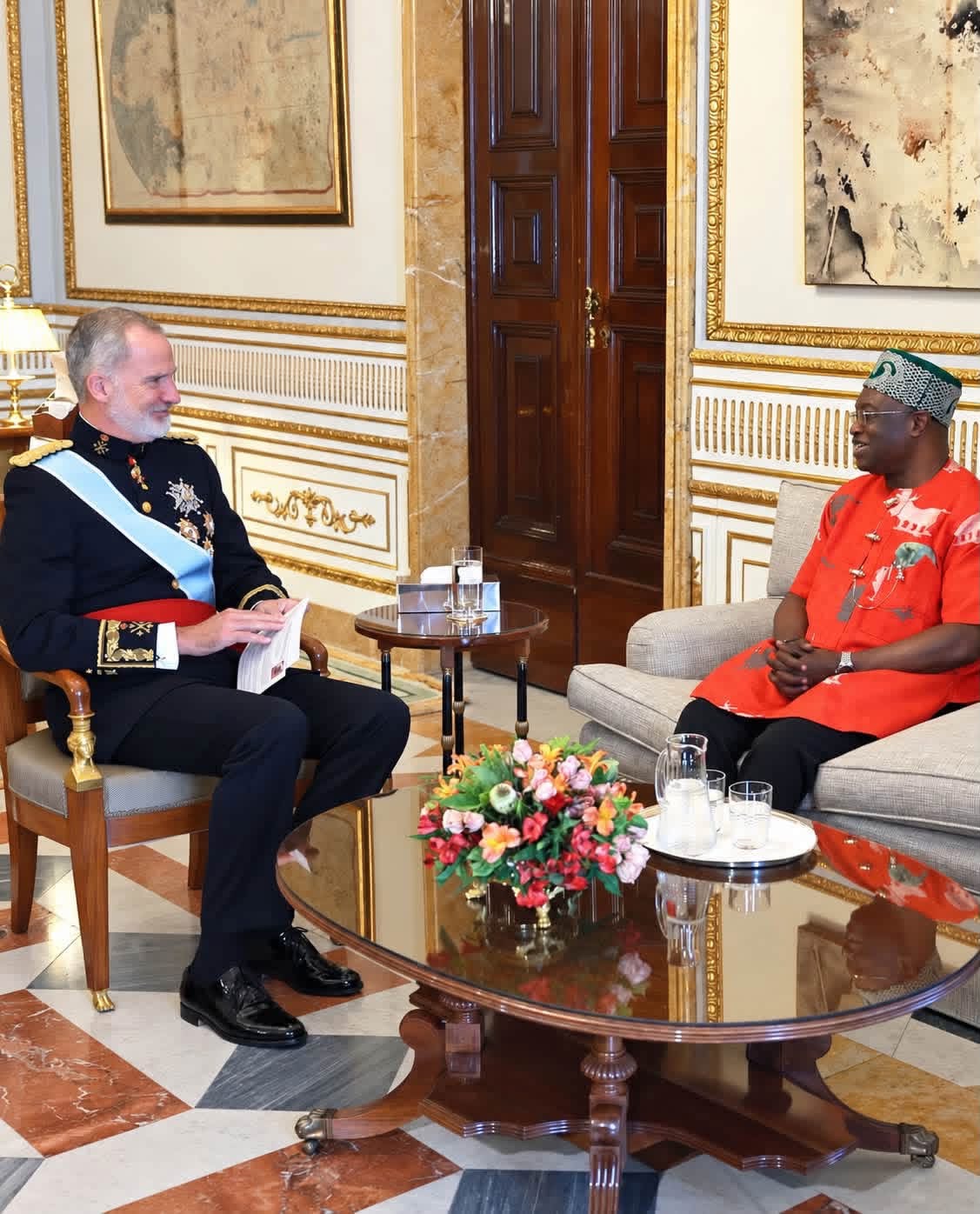
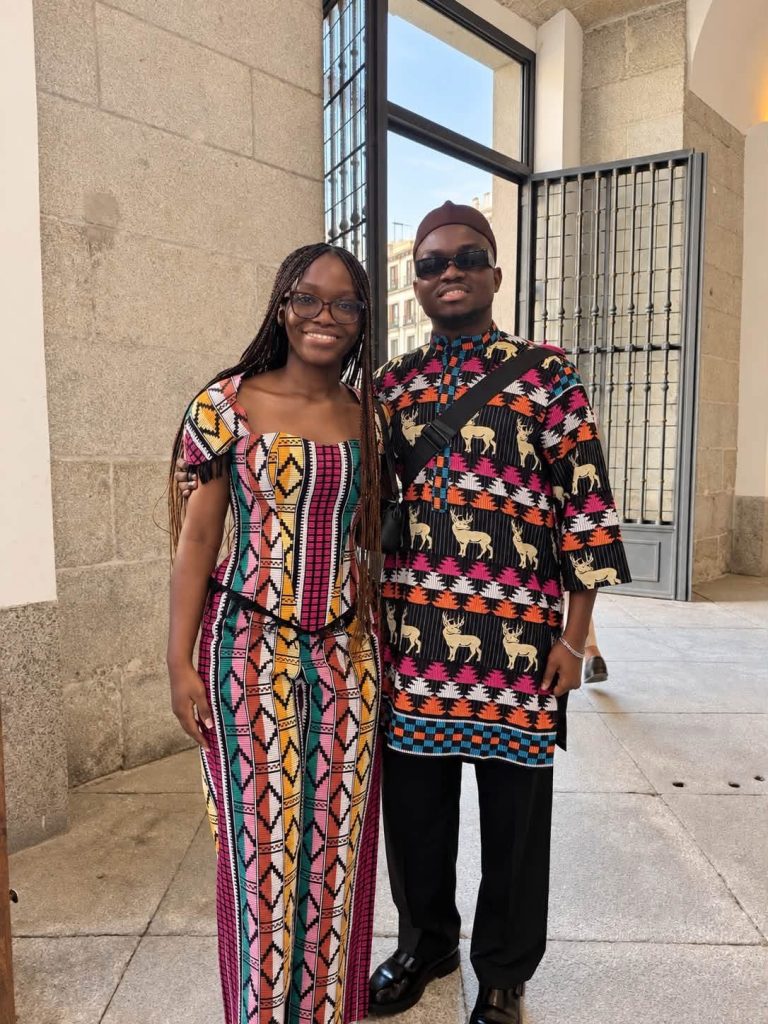
Nigeria’s Ambassador to Spain, Dr Okezie Victor Ikpeazu, and members of his family have taken the campaign to promote Akwete fabric beyond Nigeria, wearing the traditional Abia textile at a diplomatic ceremony in Madrid.
The Ikpeazu family wore outfits made from Akwete fabric on Monday, September 14, 2026, during the ambassador’s presentation of his Letters of Credence to Spain’s King Felipe VI at the Royal Palace of Madrid.
The appearance came weeks after Nigeria’s First Lady, Senator Oluremi Tinubu, visited Abia State and launched an initiative aimed at reviving the historic Akwete weaving industry.
The decision to wear the fabric at the high-profile diplomatic event was described as a deliberate statement of cultural pride and support for indigenous Nigerian products.
Speaking on the choice of attire, Ikpeazu said his decision was influenced by his longstanding commitment to promoting Made-in-Aba products during his eight-year tenure as Governor of Abia State.
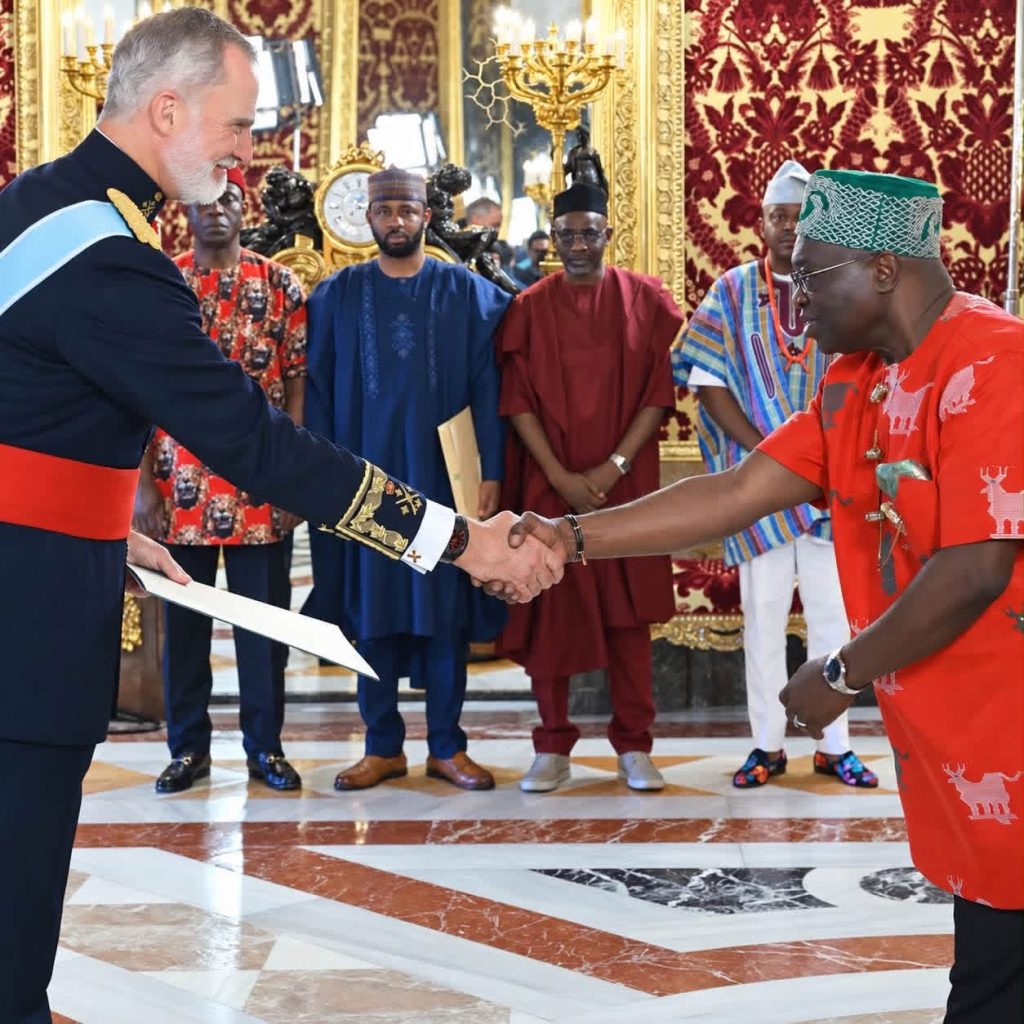
He said, “As Governor of Abia State for eight years, I devoted considerable time and effort to promoting Made-in-Aba products, including wearing and showcasing Akwete fabric from Ndoki.
“I believed that I had a responsibility to represent and promote what our people are known for.
“When I saw the First Lady visit Ndoki and give the promotion of Akwete fabric greater national attention, I felt that, as Nigeria’s Ambassador to Spain, it was only fitting for me to join her in advancing the campaign.”
Ikpeazu added that wearing Akwete in Spain was an opportunity to introduce the traditional textile to an international audience and promote Nigeria’s cultural heritage.
Akwete, produced in the Ndoki area of Ukwa East Local Government Area of Abia State, is renowned for its intricate handwoven patterns, vibrant colours and cultural significance.
The craft has traditionally been sustained largely by women who have passed weaving techniques from one generation to another.
During her July 2026 visit to Abia, the First Lady announced a ₦2bn intervention to support women involved in Akwete production, with the objective of increasing production, empowering local weavers and preserving the centuries-old craft.
The initiative also seeks to enhance the national and international visibility of Akwete and create greater economic opportunities within the creative and cultural sector.
For Ikpeazu, the decision to wear the fabric at the Royal Palace of Madrid provides another platform to advance that objective.
The former governor had, during his tenure, promoted the Made-in-Aba campaign as part of efforts to encourage the production and consumption of locally made goods.
His current diplomatic posting, therefore, provides another opportunity to showcase Nigerian products and cultural heritage before an international audience.
The appearance of the Ikpeazu family in Akwete at a major diplomatic event also places the spotlight on the artisans and women whose work sustains the traditional textile industry.
Beyond its cultural symbolism, the move highlights the potential of Nigeria’s creative industries to generate economic opportunities while projecting the country’s identity internationally.
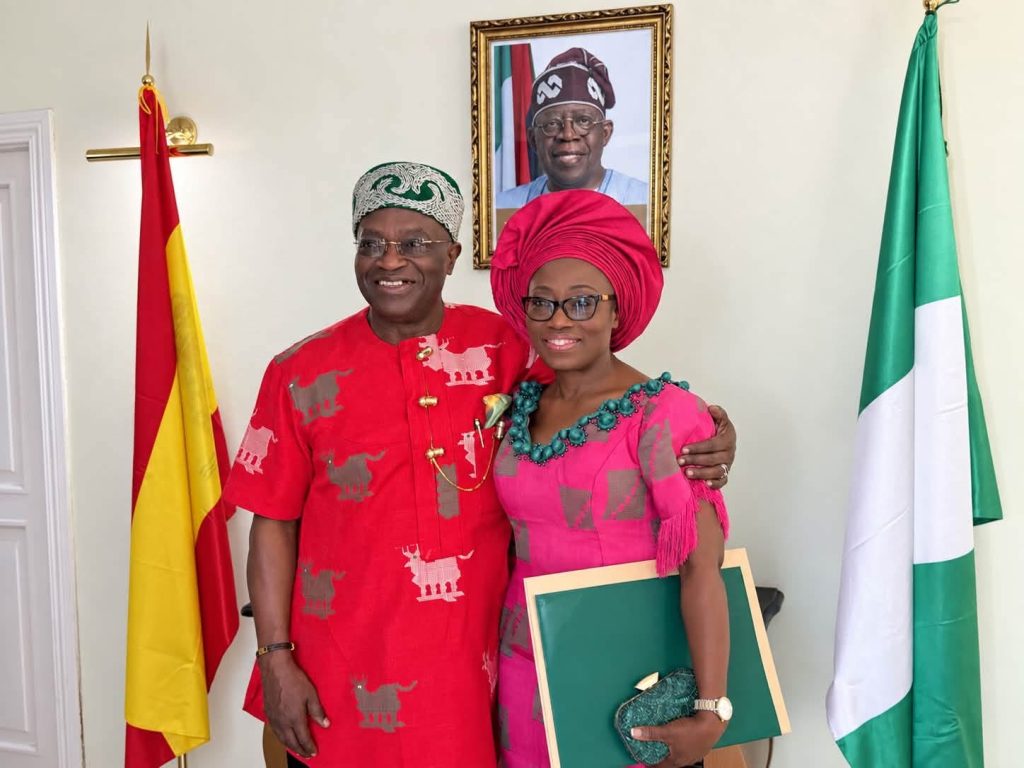
From the traditional looms of Ndoki to the Royal Palace of Madrid, Akwete has once again found itself at the centre of an international showcase of Nigerian culture and indigenous enterprise.
Stay informed and ahead of the curve! Follow The National Concord Blog Newsletter for real-time updates, breaking news, and exclusive content. Don't miss a headline – join now below!