


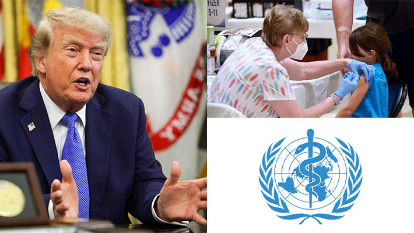
The World Health Organisation (WHO) has defended its approach to childhood immunisation after United States President Donald Trump signed an executive order seeking to reduce the number of routinely recommended childhood vaccinations in the country.
Trump’s order, signed on Monday, calls for the number of childhood immunisations recommended in the United States to be reduced from 18 to 11. It also calls for the combined measles, mumps and rubella (MMR) vaccine to be administered as three separate vaccines during different visits.
Responding to the development at a press briefing in Geneva, WHO spokesperson Tarik Jašarević said the organisation’s recommendations are based on scientific evidence and decades of research.
“What comes out from WHO is science-based,” Jašarević said.
He said the WHO’s immunisation recommendations are developed from more than six decades of research conducted with national authorities and independent expert groups.
According to him, the timing of vaccinations is also determined through extensive assessments of when people are most vulnerable to specific diseases and how their immune systems develop.
WHO Defends Evidence-Based Vaccine Schedules
The WHO spokesperson explained that governments and vaccination programme managers receive independent recommendations from technical advisory groups made up of experts from different fields.
The organisation’s position comes as the Trump administration pushes for a significant change in the approach to childhood vaccination in the United States.
Trump has described his proposed changes as a “gold standard” approach intended to ensure Americans receive what he considers the best scientific information.
The US president has also argued that the country should align its recommendations with other nations that use fewer childhood vaccine doses.
However, health experts have cautioned against making direct comparisons between countries because populations face different disease risks and healthcare systems differ considerably.
MMR Vaccine Also Targeted
Another major aspect of Trump’s order is the proposal to separate the combined MMR vaccine into three individual shots.
The MMR vaccine protects against measles, mumps and rubella and is routinely administered as a combined vaccine.
Critics argue that separating the vaccines could result in additional visits and increase the possibility of delays or missed vaccinations.
The move has also renewed debate surrounding claims linking vaccines to autism.
The WHO report noted that Trump’s order supports Health Secretary Robert F. Kennedy Jr.’s position on vaccination and autism, despite studies finding no established link between vaccines and autism.
Medical Experts Reject Changes
The proposed changes have attracted criticism from health experts, medical associations and vaccine manufacturers.
American Academy of Pediatrics President Andrew Racine said there was no new evidence supporting major changes to childhood immunisation guidance.
He pointed to numerous studies involving millions of people that have found no link between vaccines and autism.
Public health expert Michael Osterholm also urged parents to continue relying on evidence-based immunisation recommendations developed by medical experts.
He stressed that Trump’s executive order does not alter the scientific evidence accumulated over decades supporting childhood vaccination.
Experts Warn of Potential Consequences
The debate has raised concerns about the possible impact of changes to the US vaccination schedule, particularly if parents interpret the policy as evidence that previously recommended vaccines are no longer necessary.
Reuters reported that critics argue the existing US schedule is based on decades of evidence and is designed around the specific health needs of the American population.
The American Academy of Pediatrics has similarly maintained that there is no new scientific evidence justifying significant changes to childhood immunisation recommendations.
The disagreement therefore goes beyond the number of vaccines children receive. At its centre is a broader debate over how public-health policy should be developed and whether vaccination schedules should be determined primarily by established scientific evidence or by political decisions.
For the WHO, the position remains clear: childhood immunisation schedules should be guided by scientific evidence, disease risks and expert assessment of the health needs of individual populations.
The organisation said it hopes countries will continue to rely on the best available scientific evidence when developing their vaccination policies.
Stay informed and ahead of the curve! Follow The National Concord Blog Newsletter for real-time updates, breaking news, and exclusive content. Don't miss a headline – join now below!