


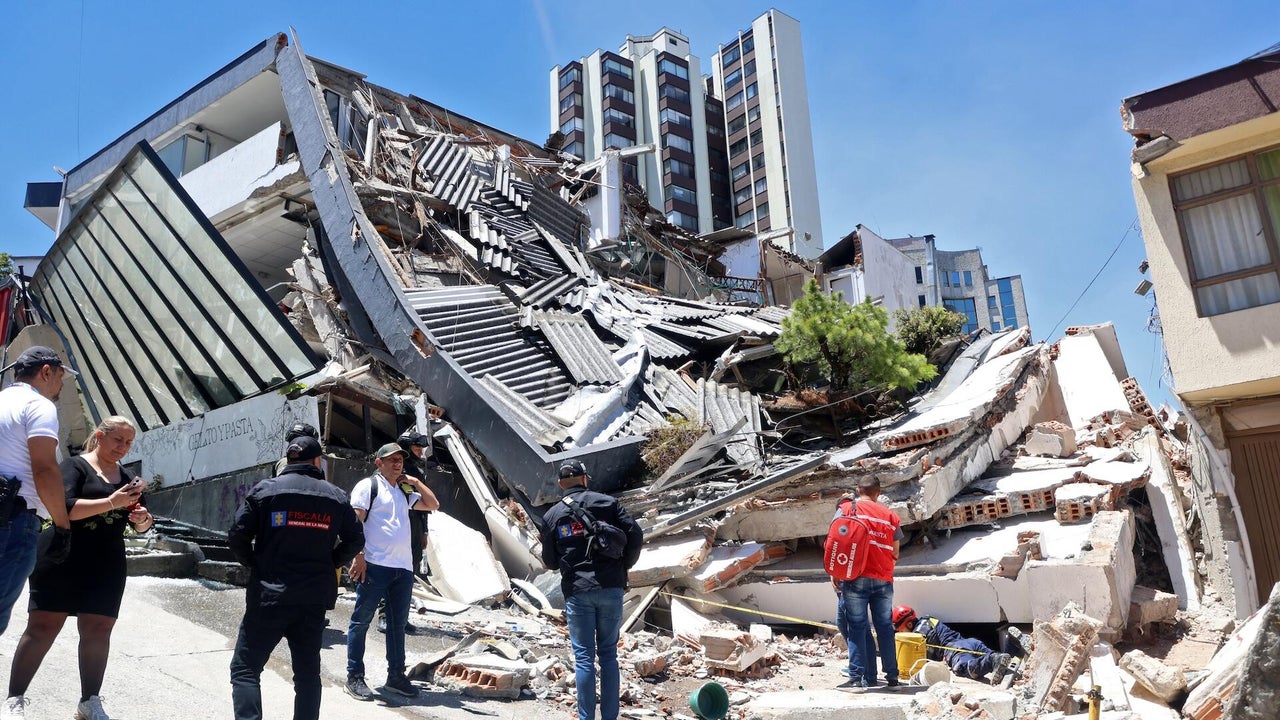
The death toll from the devastating 7.4-magnitude earthquake that struck western Colombia has risen above 200, while rescue teams continue a desperate search for more than 3,000 people reported missing.
The powerful earthquake struck on Monday, August 10, causing widespread destruction across several parts of the country. The hardest-hit areas include Cali, Pereira, Manizales and Quibdó, where buildings collapsed and residents were trapped beneath rubble.
Reports on the casualty figure have continued to change as emergency workers reach previously inaccessible areas. The Gazette report puts the death toll at about 240, while other reports published as rescue operations continued placed the figure between 213 and 250.
More than 3,000 people are still reported missing, raising fears that the death toll could increase significantly as rescuers gain access to collapsed structures and isolated communities.
Rescue Teams Race Against Time
Emergency workers, soldiers, volunteers and relatives have continued searching through collapsed buildings using heavy machinery and, in some locations, their bare hands.
Rescue operations have produced moments of hope, with several survivors reportedly pulled from the rubble many hours after the earthquake struck. In Cali, rescuers have reportedly saved dozens of people from collapsed buildings.
However, the scale of the destruction and the number of people still unaccounted for have placed enormous pressure on rescue teams.
Authorities are racing against time because the chances of finding survivors generally decline as people remain trapped without adequate food, water, medical attention and ventilation.
Thousands Injured
The earthquake has also left thousands of people injured.
Recent reports have put the number of injured at more than 2,500, while hundreds of buildings have either collapsed or suffered significant damage. One report said approximately 1,600 buildings had been damaged across affected areas.
Hospitals and emergency facilities in some affected areas have been placed under considerable pressure as medical workers treat victims and search for additional survivors.
Government Declares Emergency
Colombian President Abelardo de la Espriella, who assumed office only days before the disaster, has been leading the government’s emergency response.
The government declared an emergency to accelerate the release of resources and coordinate rescue and relief operations.
Military personnel have also been deployed to affected areas to support rescue operations, secure communities and assist with the distribution of humanitarian supplies.
International assistance has also begun arriving, with the United States pledging more than $15 million in emergency support, while Mexico and El Salvador have announced assistance for the affected population.
Major Cities Among Worst Hit
The earthquake was particularly destructive in western Colombia.
Cali and Pereira have reported major casualties and structural damage, while Manizales also suffered significant destruction. In Quibdó, communications problems have complicated rescue and relief operations.
The earthquake was also felt in neighbouring countries, including Ecuador and Panama, although the worst destruction occurred inside Colombia.
Search for Missing Persons Continues
With thousands still unaccounted for, families continue to gather outside hospitals and damaged buildings awaiting information about relatives.
Authorities have urged people to remain calm while search-and-rescue operations continue.
The disaster is already being described as one of Colombia’s most devastating earthquakes in decades, with the rapidly rising death toll and widespread destruction presenting a major humanitarian challenge for the country’s new administration.
For now, rescuers remain focused on locating those trapped beneath the rubble, while government agencies and international partners work to provide emergency assistance to survivors.
The situation remains fluid, and casualty figures are expected to change as rescue teams continue their operations.
Stay informed and ahead of the curve! Follow The National Concord Blog Newsletter for real-time updates, breaking news, and exclusive content. Don't miss a headline – join now below!


















I was recommended this website bby myy cousin. I’m not sure whether this posdt is
writteen byy himm as noboddy else kmow such detailed
abot my problem. Youu are wonderful! Thanks! xnxx