


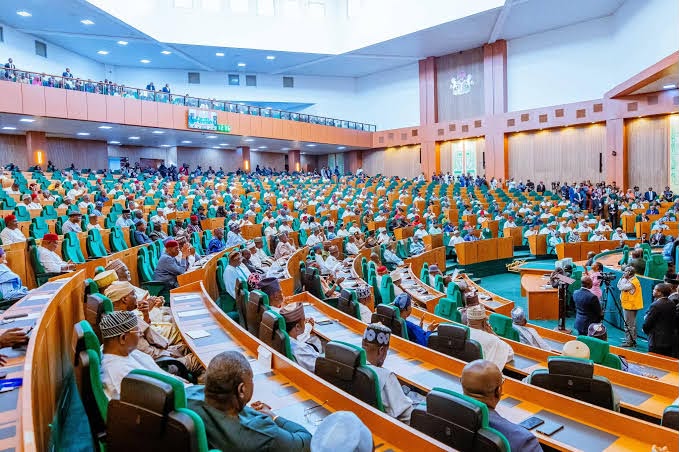
The House of Representatives has passed for second reading a bill sponsored by Deputy Speaker Benjamin Kalu and 12 other lawmakers seeking to establish a legal framework for the development and industrialisation of Nigeria’s drone industry.
The bill, which scaled second reading during plenary on Wednesday, October 21, 2026, is designed to move Nigeria beyond dependence on imported drone technology towards indigenous research, design, manufacturing and commercialisation.
Titled “A Bill for an Act to Provide for the Development, Promotion and Industrialisation of the Nigerian Drone Industry; and for Related Matters,” the proposed legislation seeks to position Nigeria as a competitive player in the regional and international drone market.
Leading the debate on the bill’s general principles, co-sponsor Hon. Satomi Ahmad said the legislation would establish the legal and institutional framework needed to support local innovation, strengthen technical capacity, attract investment and create employment opportunities.
Ahmad lamented that Nigeria’s reliance on imported technology continues to limit opportunities for domestic innovation and industrial growth, warning that indigenous enterprises could struggle to turn promising ideas into commercially viable products without coordinated government support.
He urged lawmakers to support the bill, which proposes targeted incentives, government procurement preferences, innovation funding and local-content requirements to stimulate the growth of the domestic drone industry.
According to him, successful implementation would help transform Nigeria from a consumer of drone technology into a producer of indigenous solutions, skilled professionals and competitive industrial products.
“Drone technology is increasingly vital to agriculture, infrastructure, emergency response, scientific research and defence. Nigeria must therefore move beyond dependence on imported technology towards developing its own capacity to design, manufacture and commercialise drones,” Ahmad said.
He added that the future belongs to countries capable of converting technological innovation into industrial capacity, economic prosperity and national security.
Bill proposes National Drone Industrialisation Council
The proposed legislation contains 49 clauses divided into 12 parts and provides for the establishment of a National Drone Industrialisation Council.
The council would coordinate policies, industrial targets, incentives, partnerships, industrial zones and export development to support the growth of the sector.
The bill also mandates the development of a National Drone Industrialisation Policy within 12 months of its enactment, with measurable targets covering local content, employment, research, manufacturing and exports.
To encourage investment and local production, it proposes performance-based incentives, including customs and import-duty concessions, research and development tax credits, accelerated capital allowances, grants, concessionary financing, certification support and infrastructure assistance.
The proposed measures are intended to strengthen local manufacturing, encourage technology transfer, improve technical skills and create an enabling environment for indigenous drone producers and related businesses.
Safety, cybersecurity safeguards included
Beyond industrial development, the bill seeks to establish safeguards covering aviation safety, cybersecurity, data protection and national security.
Ahmad said the proposed framework would preserve the statutory responsibilities of relevant regulatory and defence authorities while ensuring that the development of the industry does not undermine responsible technological use.
He maintained that a coordinated approach to research, investment, skills development and manufacturing would open new markets for Nigerian innovation while strengthening the country’s capacity to develop technology for civilian and security applications.
Following a voice vote at plenary, the House passed the bill for second reading and referred it to the relevant committee for further legislative action.
The proposed legislation marks a move towards building a domestic drone industry capable of supporting economic diversification, technological advancement and national security, subject to the bill’s subsequent legislative consideration and implementation.
Stay informed and ahead of the curve! Follow The National Concord Blog Newsletter for real-time updates, breaking news, and exclusive content. Don't miss a headline – join now below!