
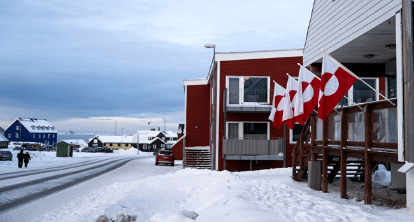
Canada and France have opened new diplomatic consulates in Greenland, a move widely interpreted as a show of support for Denmark following renewed interest by former United States President Donald Trump in gaining control of the Arctic island. The diplomatic missions were established in Nuuk, Greenland’s capital, amid rising geopolitical tensions surrounding the territory’s strategic importance.
Officials from Canada and France said the new consulates are aimed at strengthening cooperation with Greenland and Denmark in key areas such as climate change, Arctic security, and indigenous rights. Canada’s Foreign Minister Anita Anand and Governor General Mary Simon attended the inauguration ceremony, highlighting the country’s commitment to expanding its Arctic presence and partnerships.
France also appointed Jean-Noël Poirier as its consul general, becoming the first European Union country to establish such diplomatic representation in Greenland. French authorities said the mission would focus on strengthening cultural, economic, scientific, and political ties with Greenlandic authorities while reinforcing support for Denmark’s territorial integrity.
The establishment of the diplomatic outposts comes amid concerns among Western allies over Trump’s repeated statements expressing interest in acquiring or asserting greater control over the mineral-rich Arctic island. His position raised fears of escalating tensions and prompted allies to reinforce their diplomatic presence in the region.
Canada had earlier announced plans to open a consulate in Greenland in 2024, before Trump renewed calls relating to the island. The initiative forms part of Canada’s broader strategy to expand its Arctic footprint and increase security and economic cooperation across the region.
Greenland, a semi-autonomous territory under the Kingdom of Denmark, has attracted growing global interest due to its strategic location, natural resources, and emerging shipping routes caused by melting Arctic ice. Analysts say the opening of additional consulates reflects increasing international competition and cooperation in the rapidly evolving Arctic landscape.
Stay informed and ahead of the curve! Follow The National Concord Blog Newsletter for real-time updates, breaking news, and exclusive content. Don't miss a headline – join now below!