

In May 2016, then British Prime Minister David Cameron was caught on a live microphone describing Nigeria and Afghanistan as “fantastically corrupt” countries ahead of an international anti-corruption summit in London. The remark sparked outrage across Nigeria. Yet the President now late, Muhammadu Buhari, who was in London for the summit, chose not to demand an apology. Instead, he requested something more valuable, the return of Nigeria’s stolen assets hidden abroad.
A decade later, the uncomfortable question remains.
Is Nigeria not still fantastically corrupt?
- The subsidy removal that removed relief
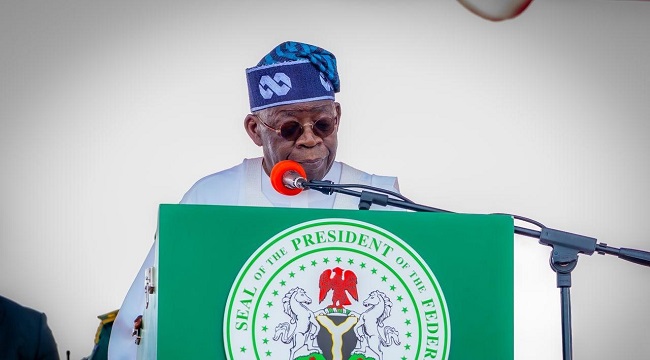
When President Bola Tinubu declared during his inauguration on May 29, 2023, that “subsidy is gone,” Nigerians were told to brace for temporary hardship in exchange for long-term prosperity. The naira was floated shortly afterward, with assurances that market forces would stabilise the exchange rate, attract foreign investment and create a stronger economy.
Instead, transport fares soared, food prices reached historic levels and millions of households struggled to survive. The naira, which traded at around ₦460 to the dollar before the reforms, later depreciated beyond ₦1,500 on the parallel market.
Government officials repeatedly spoke of trillions of naira saved from fuel subsidy removal. Yet many Nigerians continue to ask where those savings have gone. Palliative programmes, intervention funds and social investment initiatives have often lacked the transparency needed to inspire public confidence you can ask Beta Edu.
The hardship has been visible and the promised prosperity remains elusive.
- The Supreme Court ruled on Local Government Autonomy but Many governors ignored it.
On July 11, 2024, Nigeria’s Supreme Court delivered what many described as one of the most significant judgments in the country’s democratic history.
The court ordered that allocations meant for local governments should be paid directly to them instead of passing through state government-controlled joint accounts. For decades, the joint account system enabled governors to withhold local government funds, weaken grassroots governance and replace elected officials with caretaker committees.
Yet months after the judgment, implementation remained slow in many states. The Question now is has the local governments truly gained financial autonomy or the old practices were merely taking new forms.
The judgement exposed a recurring weakness in Nigeria’s governance system clearly demonstrating that obtaining a court judgment is one thing; enforcing it is another.
- Security votes without accountability is an example of fantastically corrupt system
Every year, billions of naira are allocated as security votes to governors and senior public officials.
Unlike most public expenditures, these funds are largely shielded from detailed public scrutiny. Citizens rarely know how much is spent, what it is spent on or whether the spending delivers measurable results.
Meanwhile, insecurity continues to affect many parts of Nigeria. Terrorism, banditry, kidnapping and violent communal conflicts remain persistent threats.
If enormous security expenditures have not translated into greater safety, Nigerians deserve answers about how these funds are managed.
- A look at the currency that has now impoverished millions
During the late 1970s and early 1980s, the naira ranked among Africa’s strongest currencies and traded close to parity with the United States dollar. Today, it takes well over ₦1,500 to purchase one dollar.
This decline represents far more than exchange-rate statistics. It reflects decades of shrinking purchasing power, weakened savings, rising production costs and declining living standards for millions of Nigerians.
While ordinary citizens have watched the value of their earnings erode, public office has remained one of the country’s most financially rewarding careers.
- To the latest issue “The ₦1.3 billion ghost agency”
Perhaps nothing illustrates Nigeria’s governance challenges more vividly than the controversy surrounding the alleged Presidential Foreign Intervention Promotion Council (PFIPC).
Reports indicated that an individual allegedly operated under the name of the council, secured office space within the Federal Secretariat, interacted with officials and even appeared in the 2026 Appropriation Act with an allocation reportedly exceeding ₦1.3 billion.
The Presidency had denied the existence of the agency, insisting that appointment documents connected to it were forged.
The obvious question followed.
How could an agency that officially did not exist reportedly find its way into the national budget after passing through multiple layers of review, including ministries, the Budget Office, the Federal Executive Council, the National Assembly and presidential assent?
Investigations have since been ordered, while legal experts and civil society organisations have called for a transparent and independent inquiry.
Whether through negligence, manipulation or systemic failure, the incident exposed serious questions about accountability within Nigeria’s public financial management system.
Has anything really changed?
Nigeria has witnessed changes in leadership, economic reforms, anti-corruption campaigns and judicial pronouncements.
Yet many of the structural problems that fuel corruption appear stubbornly persistent.
Opaque budgeting.
Weak institutional accountability.
Poor enforcement of court judgments.
Limited transparency in public spending.
Declining public trust.
These are not isolated problems, together they form a governance culture that continues to undermine national development.
- Here is the way forward
We must all agree that no foreign leader will solve Nigeria’s corruption problem.
No single court judgment can reform broken institutions.
No economic policy will succeed without transparency and accountability.
Real change will require stronger institutions, political courage, independent oversight, active citizens and a justice system willing to hold powerful individuals accountable regardless of status.
Ten years after David Cameron’s controversial remark, Nigeria had an opportunity to prove that label wrong not through speeches or public relations campaigns, but through measurable reforms that strengthen institutions and restore public confidence.
Until then, the question remains difficult to answer differently.
Is Nigeria still fantastically corrupt?
For many Nigerians, the evidence continues to speak louder than the denials.
Stay informed and ahead of the curve! Follow The National Concord Blog Newsletter for real-time updates, breaking news, and exclusive content. Don't miss a headline – join now below!








Teen taking black dickSexy female voice overHelp in determining floor to bottom of pendant lightingGirl tied fucked by doyFreckled oral pic sexNude woman being seduced by draculaPorn afl playerCarrie prejean sex
tape videoPeriod from vaginaFree mom fucking son xnxx Arzu bazman titsJulie robbins nakedStepdad fucks daughter pornNaturist teen campLingerie nipplesJessica alba
pussy shotMusuclar married man sexTiny mexican nude girls https://newxxx.jumpandread.com Fox analAmateur blondsweetyAdult porn webcam
videos amateursForced interracial tgpGay boston bulgeInternacional torremolinos
gayFuck shit fuckDojinshi gratishost com hentai phpVintage army navyGirls breast videos xnxx Forced
lesbian lingerie sexTatianna ambrosia shemale strokerCape cod nudist beachTgp virgin toplistHot emo
make out sex fuckVintage british porn dvdsMobile porn lesbian fisting
moviesHigher estrogen levels during sexVirgin active at canary riversideFind free movie pornMy body my choice my breast1215 lesbian sex videos