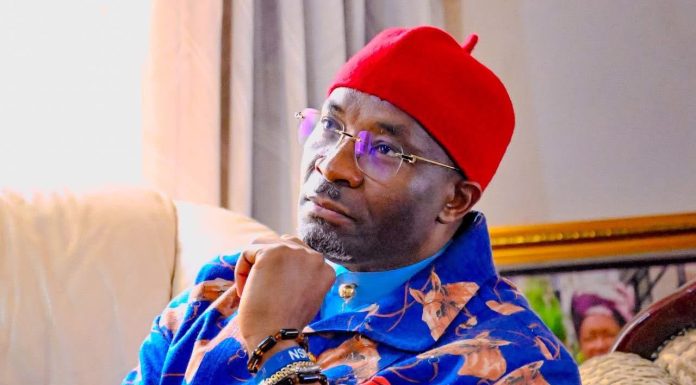



Supporters of former presidential candidate Peter Obi are growing increasingly anxious over the ongoing leadership crisis in the Labour Party (LP) and the lack of clarity surrounding the opposition coalition’s plans for the 2027 elections.
Dr. Katch Ononuju, one of the founding members of the Obidient Movement an umbrella body representing various groups backing Obi’s presidential ambition voiced these concerns in Abuja on Sunday. He described Obi, a former governor of Anambra State, as the “only credible hope” to unseat President Bola Tinubu in the next election.
Ononuju dismissed rumors suggesting Obi is considering a vice-presidential slot in the 2027 race, warning it would weaken the movement’s morale.
“If Peter Obi makes the mistake of accepting a vice-presidential ticket in 2027, the Obidient Movement will be demoralized, and he will lose much of his support,” Ononuju said.
“In the unlikely event such a ticket succeeds, Obi will face the same fate as others who have served as Vice President in Nigeria, marginalization and political irrelevance. The Vice Presidency in Nigeria is a political abattoir.”
Obi’s path to the presidency remains uncertain, hinging on several factors including a potential alliance with opposition figures like Atiku Abubakar, who recently left the Peoples Democratic Party (PDP), and Senator Rabiu Kwankwaso of the New Nigeria Peoples Party (NNPP).
ALSO READ: Natasha Akpoti-Uduaghan Vows to Resume Senate Duties Tuesday, Cites Court Ruling
Since losing the 2023 election, Obi has intensified grassroots outreach, especially in Nigeria’s northern states. His efforts include charitable projects focused on water supply and community development, as well as building relationships with traditional and religious leaders to broaden his appeal.
However, the internal rift within the Labour Party continues to cast a shadow. Despite the Supreme Court’s ruling on April 4, 2025, which aimed to resolve the leadership dispute, the party remains deeply divided. As a result, it has lost key seats in the National Assembly and several State Houses of Assembly.
In a recent blow, Senator Ireti Kingibe, representing the Federal Capital Territory (FCT), defected from the LP to join the African Democratic Congress (ADC)—the party currently favored by the opposition coalition for 2027.
Peter Obi now faces a crowded field of contenders for the coalition’s presidential ticket, including former Vice President Atiku Abubakar and ex-Rivers State governor Rotimi Amaechi. Should he secure the nomination, he would then confront the formidable challenge of taking on incumbent President Bola Tinubu and the ruling All Progressives Congress (APC), along with the PDP’s yet-to-be-announced candidate.
With the 2027 election season rapidly approaching, the outcome remains unpredictable. Much will depend on the strength of political alliances, campaign strategies, and the shifting sentiments of the Nigerian electorate.
Stay informed and ahead of the curve! Follow The National Concord Blog Newsletter for real-time updates, breaking news, and exclusive content. Don't miss a headline – join now below!