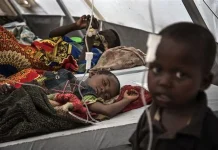



A major cholera outbreak has swept across Borno State, infecting more than 3,000 people and claiming at least 37 lives in what health officials describe as a growing public health emergency.
The outbreak, which was first reported on May 1 and officially confirmed on May 4, has spread rapidly across seven local government areas and more than 138 communities, placing severe pressure on the state’s healthcare system.
According to Dr. Saleh Abba-Kaza, Executive Secretary of the Borno State Contributory Healthcare Management Agency, the disease has now affected 36 wards across the state, with new infections continuing to emerge daily. More than 100 fresh cases were recorded within the last 24 hours alone.
The hardest-hit area remains Maiduguri Metropolitan Council, which has recorded over 2,000 cases. Jere Local Government Area follows with more than 1,000 reported infections. Other affected LGAs include Mafa, Konduga, Monguno, Ngala, and Magumeri.
Health authorities warned that poor sanitation, contaminated water sources, and open defecation have significantly contributed to the spread of the disease. Officials also expressed concern that the ongoing rainy season could worsen transmission as floodwaters wash waste and human excreta into residential communities.
“The current situation has overwhelmed our health infrastructure,” Abba-Kaza said while urging residents to adopt stricter water, sanitation, and hygiene practices.
Residents have been advised to chlorinate drinking water, maintain proper waste disposal, practice regular handwashing with soap, and immediately report symptoms such as vomiting and watery diarrhoea to healthcare facilities. Health officials also warned against relying on self-medication or treatment by unqualified persons.
The Borno State Government disclosed that efforts are underway to secure cholera vaccines, although authorities stressed that vaccination cannot replace proper hygiene and sanitation measures.
Several international organisations have joined the response efforts, including the World Health Organization, UNICEF, Médecins Sans Frontières, Save the Children, and other humanitarian partners working alongside the Borno State Ministry of Health.
Recent health sector reports had already indicated a rapidly escalating outbreak. As of May 25, humanitarian monitoring agencies documented nearly 3,000 suspected cases and dozens of fatalities across affected local government areas, highlighting the speed at which the disease has spread.
The outbreak represents one of the most serious cholera emergencies recorded in Borno in recent years and raises fresh concerns about public health vulnerabilities in communities already facing displacement, conflict-related disruptions, and limited access to clean water infrastructure.
Health authorities have called on community leaders, development partners, and residents to intensify awareness campaigns and cooperate with emergency response efforts as the state works to contain further spread of the disease.
Stay informed and ahead of the curve! Follow The National Concord Blog Newsletter for real-time updates, breaking news, and exclusive content. Don't miss a headline – join now below!