

Candidates, Dates, and What’s at Stake
By Charles Thomas | National Concord
Nigeria is once again girding itself for a political contest that will define the character and direction of Africa’s most populous nation. With the Independent National Electoral Commission having issued a revised electoral timetable under the newly enacted Electoral Act 2026, the machinery of democracy is in motion and this time, the stakes feel higher, the coalitions bolder, and the national mood more combustible than it has been in years.
General elections are scheduled for January 16, 2027, when Nigerians will go to the polls to elect the President and Vice President, members of the Senate and the House of Representatives, state governors across the federation, and members of state houses of assembly. It is a crowded ballot and a consequential one.
THE DATES: A COMPRESSED CALENDAR
For the first time since Nigeria’s return to civilian rule in 1999, a presidential election will be conducted in January rather than February or later. The revised timetable was necessitated by the repeal of the Electoral Act, 2022, and the enactment of the Electoral Act, 2026, which introduced adjustments to the statutory timelines governing pre-election and electoral activities.
Under the revised schedule, Presidential and National Assembly Elections will now hold on Saturday, 16th January 2027, while Governorship and State Houses of Assembly Elections will hold on Saturday, 6th February 2027.
The road to those election days is already well-mapped. Party primaries and dispute resolution ran from April 23 to May 30, 2026, with submission of nomination forms for presidential and National Assembly candidates scheduled from June 27 to July 11. The publication of the final list of candidates for presidential and National Assembly contests is set for September 12, 2026, while campaigns officially commence on August 19, 2026.
Governorship elections will not be held in eight of Nigeria’s 36 states — Anambra, Bayelsa, Edo, Ekiti, Imo, Kogi, Ondo, and Osun due to their off-cycle poll schedules.
THE INCUMBENT: BOLA AHMED TINUBU AND THE APC
Nigeria’s election season is already well underway in all but official terms, testing the popularity of President Bola Tinubu’s attempt to overhaul one of Africa’s largest economies and resolve multiple security crises.
The 73-year-old launched his presidency in 2023 by scrapping fuel subsidies and removing a currency peg, changes that initially drove up inflation but have since helped attract investment and boost economic growth. His supporters point to infrastructure projects along the Lagos-Calabar Coastal Road and newly electrified communities as evidence that the pain of reform is yielding dividends.
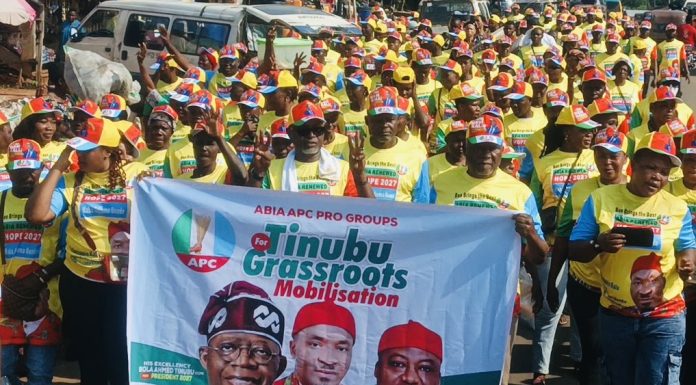
Incumbent President Bola Tinubu has made his intentions known to run for a second term under the All Progressives Congress. The ruling party has officially endorsed him, and at least five state governors and nearly a dozen federal lawmakers from the main opposition Peoples Democratic Party have defected to the APC in recent months, including governors from key oil-producing states Rivers, Delta, and Akwa Ibom each with significant voting populations.
Yet Tinubu’s path to re-election is far from smooth. A poll revealed that more than half of respondents, 53.1 per cent do not support his bid for a second term, with 64.6 per cent of respondents citing economic hardship and the rising cost of living as their top concern under his leadership, followed by insecurity at 22.9 per cent. Critics have also raised concerns about the independence of key institutions, with some arguing that the administration is positioning loyalists in the judiciary, police, and INEC ahead of the vote.
THE OPPOSITION: THE ADC COALITION
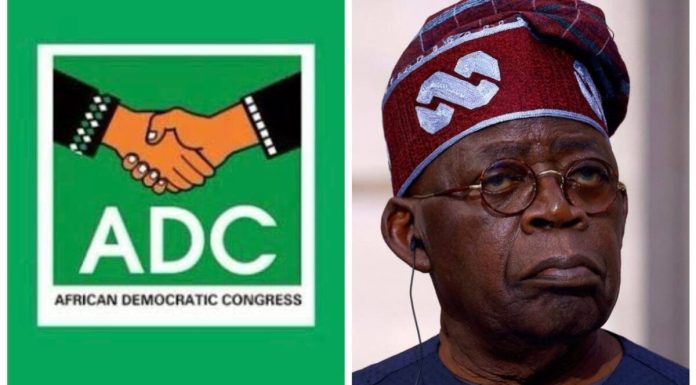
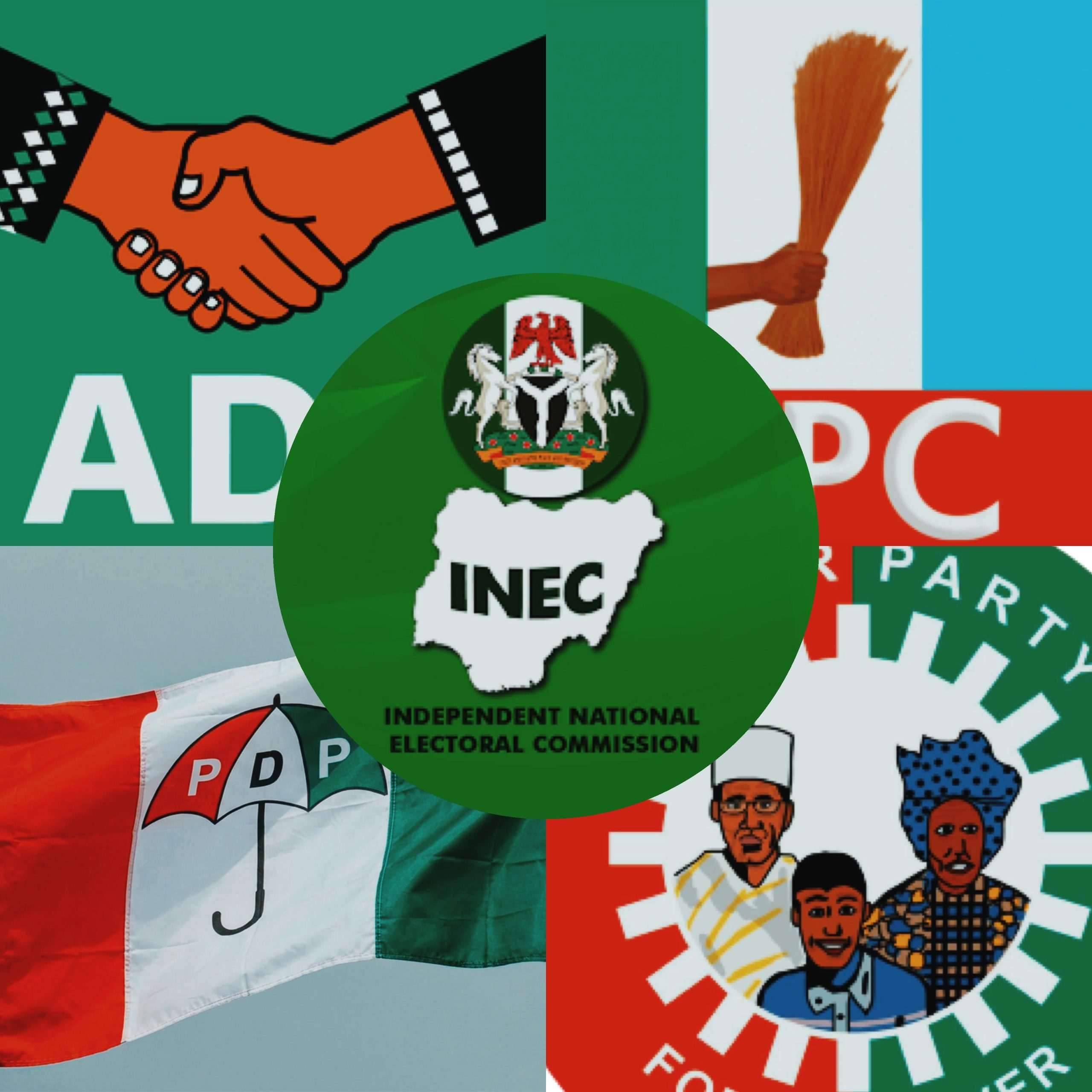
The most significant development of Nigeria’s pre-election period has been the formation of a grand opposition coalition, assembled under the banner of the African Democratic Congress. After nearly two years in the making, the coalition’s primary objective is to defeat President Bola Tinubu in the 2027 election.
At the heart of this alliance are a group of influential political figures: former Vice President Atiku Abubakar, Labour Party’s 2023 presidential candidate Peter Obi, former Kaduna State Governor Nasir El-Rufai, and several other former governors, cabinet members, and serving parliamentarians across Nigeria’s political divides.
The coalition has grown further, with former Kano Governor Rabiu Musa Kwankwaso joining the ADC, a development that brings three of President Tinubu’s most formidable rivals under one banner and strengthens the coalition’s northern base, with Kwankwaso bringing his devoted Kwankwasiyya movement and a large northern Muslim voting bloc that could prove decisive nationally.
The arithmetic of 2023 gives the coalition reason for optimism. Atiku and Obi pulled over 12 million combined votes in 2023, more than Tinubu’s winning tally of 8 million. However, political mathematics does not always translate into electoral victory.
The coalition’s severest test remains internal: who gets the presidential ticket. Atiku, 78, is seeking to make a seventh run for the presidency and remains the most influential northern politician in the coalition, offering to contest for a single term before handing over to Obi. No formal agreement has been announced, and competing ambitions could yet fracture the alliance before party primaries are concluded.
The ADC itself has been rocked by a leadership crisis, with reports of its national chairman and secretary being removed from INEC’s website, a development the party’s leadership attributes to interference by the ruling APC. In an environment as turbulent as this, the opposition’s cohesion is as much at risk from within as from without.
OTHER CONTENDERS
Beyond the main principals, several other figures are being watched closely. Former Rivers State Governor and ex-Minister of Transportation Rotimi Amaechi, who previously ran for the APC presidential nomination in 2023 before losing to Tinubu, has been considered a possible candidate by several publications. Activist and Sahara Reporters founder Omoyele Sowore is also expected to contest again, as he has in previous cycles, carrying a protest-candidate profile that speaks to Nigeria’s disenchanted youth. And while no formal declaration has been made, former President Goodluck Jonathan remains eligible to run in 2027 under any political party of choice, having served only one elected term.
THE ISSUES: WHAT NIGERIANS ACTUALLY WANT
Three issues dominate public discourse as the election approaches: the economy, security, and the integrity of the electoral process itself.
On the economy, Nigerians are fatigued. Analysts warn that the cost-of-living crisis is a major concern for voters, with over 139 million Nigerians living below the poverty line. Tinubu’s supporters frame the reforms as necessary medicine, painful now but curative in the long run. His critics argue that ordinary citizens have borne a disproportionate share of the burden while those at the top have remained insulated.
On security, the next administration will have to tackle major social challenges, including expanding access to education and healthcare, creating jobs for a fast-growing young population, and reducing poverty. Banditry in the North West, insurgency in the North East, secessionist agitation in the South East, and oil theft in the Niger Delta continue to test the state’s capacity and the public’s patience.
On electoral integrity, the issue of how to share rolling election results has raised tensions, with opposition politicians and civil society groups insisting that voting results from polling stations must appear in real time on the electoral commission’s website, to guard against tampering with tallies recorded on paper. INEC, now under a Tinubu appointee, faces pressure to demonstrate impartiality in an atmosphere of deepening suspicion.
THE VERDICT OF HISTORY
Nigeria is a country that has repeatedly surprised itself electing a former military ruler against a sitting president in 2015, then producing a three-horse presidential race in 2023 that was litigated all the way to the Supreme Court. The 2027 election is shaping up to be no less dramatic.
2026 is a hinge year politically, economically and socially that will determine whether the country enters the 2027 general elections with renewed confidence or deepening uncertainty. The outcome will depend on whether the opposition can convert its collective frustration into a single credible ticket, whether the ruling party’s structural advantages can be contained by public anger, and above all, whether Nigerians themselves turn out to vote in sufficient numbers to make their verdict impossible to ignore.
Whatever happens on January 16, 2027, Nigeria will not be a spectator. It never is.
Charles Thomas is a journalist, broadcaster, and editor with Switch Media Communications, publishers of the National Concord Blog.
Stay informed and ahead of the curve! Follow The National Concord Blog Newsletter for real-time updates, breaking news, and exclusive content. Don't miss a headline – join now below!