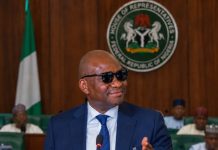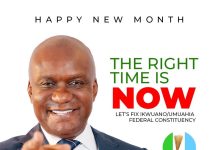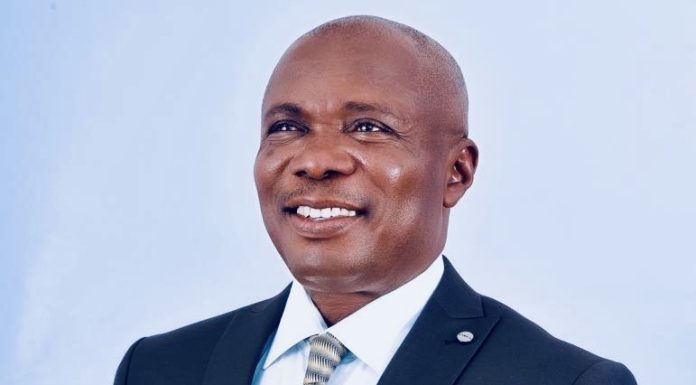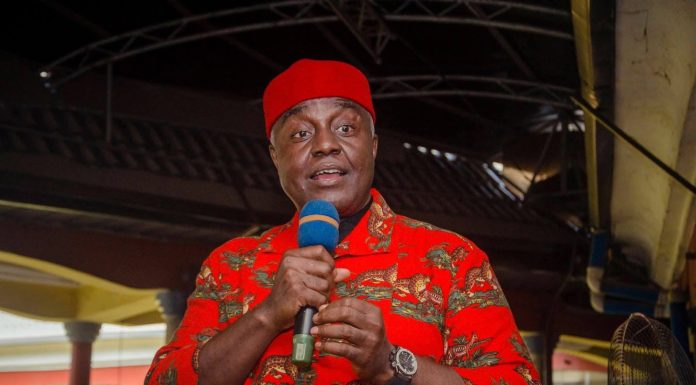



In politics, words are cheap but records are expensive. For 3 years and some months, Hon. Obi Aguocha occupied the seat of Ikwuano/Umuahia Federal Constituency in the House of Representatives. During campaigns and on the floor of the Green Chamber, his message was consistent: accountability, transparency, and people-first representation. Those are noble ideals. But ideals only matter when they are lived, not just spoken. It is time for Aguocha to practice what he preaches.
Accountability begins with reporting. A representative holds public trust, and that trust is serviced by regular, detailed briefings to constituents. For 3 years and some months, the people of Ikwuano/Umuahia deserved quarterly town-halls, published lists of constituency projects, and clear breakdowns of how their federal allocation was influenced and tracked.
Transparency is not a slogan for press releases; it is the discipline of opening the books. Where are the project sites with completion timelines? Where are the contractor names, contract sums, and handover dates? If these were not routinely made public, then the gap between preaching and practice is wide.
The same standard applies to zonal intervention funds and constituency projects. Across Nigeria, these projects are the most visible test of a lawmaker’s sincerity. Ikwuano’s farmers need roads to evacuate produce from Olokoro, Oboro, and Ibere. Umuahia’s youths need ICT hubs and skill centers that actually function beyond ribbon-cutting day. For 3 years and some months, every single project nominated under Aguocha’s name should have a verifiable address, status report, and impact assessment. Anything less turns “transparency” into theatre.
Accountability also means owning outcomes. Representation is not measured by motions moved, but by conditions changed. The Umuahia-Ikot Ekpene Road remained a nightmare. Erosion sites in Ikwuano expanded. Federal employment slots and empowerment schemes still felt like rumours to the average graduate in Ikwuano/Umuahia. A transparent representative publishes a scorecard: bills sponsored, jobs facilitated, petitions resolved, and interventions attracted. If that scorecard cannot be produced and defended in every ward from Nkwoegwu to Amawom, then the preaching has outrun the practice.
To be clear, the demand here is not perfection. No lawmaker fixes every problem in one term. But accountability is about process, not just results. It is about showing the people how decisions were made, who was consulted, what options were rejected, and why. For 3 years and some months, Aguocha’s tenure should be auditable by any constituent with a smartphone. Budgets influenced, committee assignments leveraged, and oversight visits conducted must be documented and accessible.
The moral authority to demand transparency from the executive begins with practicing it in the legislature. You cannot call out governors for opaque contracts while your own constituency projects are shrouded in silence. You cannot champion FOI on national TV and then run a closed-door style of representation at home.
Ikwuano/Umuahia Federal Constituency has heard the sermons on accountability. What it needs now is the example. For the 3 years and some months he held the mandate, Hon. Obi Aguocha should match his message with a record that any citizen can verify without a lobbyist. That is how trust is built. That is how a constituency recovers from neglect. And that is the only way the words “accountability” and “transparency” will mean anything the next time they are spoken on a campaign podium.
For 3 years and some months, the yardstick of true representation should have been accessibility.
A lawmaker who preaches transparency does not hide behind Abuja protocols. He publishes an open calendar of constituency engagements, not just during election season. If ward meetings, stakeholder dialogues, and feedback clinics were irregular or undocumented, then the claim of “people-first” becomes rhetorical. Accountability means a farmer in Ibere or a trader in Ahia Ohuru should be able to point to when, where, and how their concerns were logged and followed up. Without that trail, the sermons on openness are disconnected from ground realities.
The National Assembly is not a ceremonial body. Its core mandate includes oversight of federal agencies and budgets that directly affect Abia Central. For 3 years and some months, Ikwuano/Umuahia needed a representative who treated oversight as duty, not as optional. Which MDAs were summoned regarding abandoned federal projects in the constituency? What reports were published after those sessions? Transparency is proven when constituents can read a summary of those interventions, see recommendations made, and track compliance. If the only evidence of oversight is a photo on social media, then practice has lagged behind preaching.
Zonal intervention funds are not private grants; they are public money tied to public outcomes.
A transparent lawmaker for 3 years and some months would have maintained a living dashboard: project name, location, award date, contractor, budget line, percentage completion, and challenges encountered. The people of Olokoro, Umuahia North, South, and Ikwuano should not be guessing whether a borehole, classroom block, or health center exists only on paper. When citizens cannot audit, suspicion replaces trust. That is the opposite of the accountability Aguocha campaigned on.
Transparency is also numerical. Ikwuano/Umuahia produces hundreds of graduates each year from institutions like MOUAU and ABSU.
For 3 years and some months, the question is simple: how many federal jobs, internships, NITDA trainings, and SME grants were directly facilitated and verifiable? A transparent office keeps and publishes a register — names redacted for privacy if needed, but with totals, agencies, and dates. “Rumours of empowerment” are not data. If the practice does not match the preaching, then the next generation will conclude that accountability was just campaign language.
The Green Chamber records everything. Bills sponsored, co-sponsored, committee positions held, and votes cast are all public. For 3 years and some months, accountability demands that a representative translate that record into constituency benefit. How many bills directly targeted erosion in Ikwuano, federal road rehabilitation for Umuahia, or support for agro-processing? Transparency means explaining why some bills were prioritized over others, and what lobbying was done at committee stage. Without that explanation, motions moved can look impressive in Hansard but hollow in Ahiaeke.
A leader cannot credibly demand openness from former governors and ministers while running an opaque constituency office.
For 3 years and some months, the standard must be uniform. If FOI requests, procurement processes, and project selections were not proactively published, then the moral high ground claimed during debates is eroded. Practicing what you preach means applying the same scrutiny to yourself that you apply to the executive. Anything else is selective transparency, which is not transparency at all.
Ikwuano/Umuahia does not need more promises; it needs proof.
The remaining test for Hon. Obi Aguocha is to close the 3 years and some months with a comprehensive public report: projects delivered with GPS coordinates and photos, funds influenced with line-item details, jobs and trainings facilitated with verifiable numbers, and challenges admitted openly. That is how accountability is practiced, not just preached. Only when a citizen can verify without a middleman will “transparency” stop being a slogan and start being a standard for future representation in Ikwuano/Umuahia.
Stay informed and ahead of the curve! Follow The National Concord Blog Newsletter for real-time updates, breaking news, and exclusive content. Don't miss a headline – join now below!