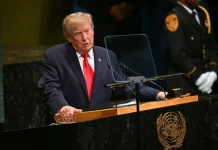



The administration of Donald Trump has launched a fresh legal offensive to strip Nigerian-born Oluwatosin Kazeem of his United States citizenship, reigniting controversy over a high-profile fraud case that had already drawn global attention.
The move, driven by the U.S. Department of Justice, comes despite an earlier sentence commutation granted by former President Joe Biden, raising serious questions about how far U.S. authorities are willing to go in punishing financial crimes involving immigrants.
At the centre of the case is a staggering fraud scheme that saw Kazeem linked to thousands of fake tax filings aimed at siphoning tens of millions of dollars from the U.S. government. Prosecutors say the operation successfully netted over $11.6 million, while attempting to steal far more.
Investigators allege that the scheme relied on stolen personal data from over 250,000 victims, with identities purchased from international cybercriminal networks and used to file fraudulent tax returns between 2012 and 2015.
But what has now triggered the latest crackdown is not just the scale of the fraud,it is the claim that Kazeem secured his U.S. citizenship under false pretences, allegedly concealing ongoing criminal activity during the naturalisation process.
Under U.S. law, citizenship obtained through deception can be revoked and authorities appear determined to test that provision aggressively.
“The message is simple,” a justice official said in filings tied to the case: individuals who obtained citizenship through fraud “were never entitled to it in the first place.”
Kazeem, who was convicted in 2017 and sentenced to 15 years in prison, had his sentence reduced after serving about six years, following clemency from Biden.
However, the latest move suggests that while his prison term may have been shortened, his legal troubles are far from over.
Legal experts say the case underscores a growing willingness by U.S. authorities to pursue denaturalisation as a weapon against financial crime, particularly where fraud intersects with immigration processes.
Critics, however, warn that such actions could set a dangerous precedent, potentially opening the door for politically motivated citizenship revocations in the future.
For now, the battle shifts to the courts where the fate of Kazeem’s citizenship will be decided.
But beyond the courtroom, the implications are already clear:
In Trump’s America, clemency may reduce your sentence but it may not save your citizenship.
Stay informed and ahead of the curve! Follow The National Concord Blog Newsletter for real-time updates, breaking news, and exclusive content. Don't miss a headline – join now below!