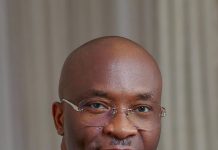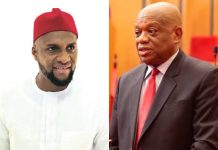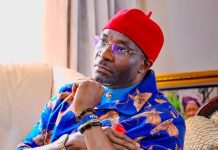



Politics is meant to be the art of service. In a democracy, the people elect a representative with the hope that their problems will be solved, their voices will be heard, and their communities will experience development. When this expectation is betrayed, the result is not just disappointment. It becomes trauma. This is the situation of Ikwuano/Umuahia Federal Constituency under the representation of Hon. Obi Aguocha from 2023 till date.
Ikwuano/Umuahia Federal Constituency is one of the most strategic constituencies in Abia State. It houses the state capital, Umuahia, and the agrarian community of Ikwuano with Michael Okpara University of Agriculture, Umudike. The constituency has federal roads, major markets, educational institutions, and a large population of youths, civil servants, traders, and farmers. The people expected that representation at the National Assembly would translate into federal projects, legislative advocacy, and empowerment. What they got instead was wasted years of political trauma.
The first anatomy of trauma was legislative invisibility. The 10th National Assembly began with new members expected to learn fast and make impact. Other first-term members from Abia State and the South East moved motions on bad roads, insecurity, and economic hardship. They asked questions on the floor and used oversight to attract federal attention to their constituencies.
For Ikwuano/Umuahia, the story was different. The constituency was largely absent from major debates. Issues that directly affect the people, erosion, collapsed roads, school building and market decay within Ikwuano/ Umuahia were not brought to the front burner. A representative’s primary job is to speak for the people. When the voice is missing in Abuja, the people become voiceless.
The second sign was constituency disconnect. Governance is a two-way relationship. The representative goes to Abuja, and the dividends return home. In the last years, town hall meetings were rare.
Traditional rulers in Ikwuano, youth leaders in Umuahia North, and women groups in Umuahia South could not point to any significant federal project attracted to the constituency. Graduates roamed the streets without federal internship or skill programs and the people felt abandoned.
The third sign was the politics of distraction. Instead of focusing on delivery, the tenure was characterized by controversies, going from one court room to another making Nnamdi Kanu his primary constituency, Energy that should have gone into attracting projects was spent on going from one public function to the other. While other constituencies were getting ICT centers, boreholes, and road interventions, Ikwuano/Umuahia was stuck in the news for the wrong reasons. This created a sense of fatigue and hopelessness among the people.
Political trauma is not abstract. It has human faces.
The farmer in Ikwuano who loses his yam barn every rainy season to erosion and gets no federal intervention feels it.
The student in MOUAU who graduates with first class but cannot find a federal job or grant feels it.
The trader in Umuahia whose goods spoil because the road to the market is impassable feels it.
The young man who believed “new face, new hope” in 2023 now feels hopeless.
When representation fails, the people pay the price. Infrastructure decays. Poverty deepens. Trust in democracy erodes. This is the trauma Ikwuano/Umuahia is currently living through.
Representation requires three things: capacity, connection, and commitment.
Capacity means understanding how government works. It means knowing which committee handles roads, which agency handles erosion, and how to draft bills and motions that attract funding. Connection means having the relationship and political will to lobby in Abuja and bring resources home. Commitment means putting the people first, above personal and party battles.
The experience of the last two years suggests that these three elements were missing. A representative who spends more time in court than in committee, more time reacting than planning, cannot deliver development. A representative who is disconnected from the grassroots cannot know the real problems of the people.
Trauma can only be healed by corrective action. Ikwuano/Umuahia must not normalize failure. 2027 must be about redemption, not repetition.
The people need a representative who already understands the legislature. Someone who does not need to be taught what a motion is or how oversight works. Someone with technical background to handle infrastructure and erosion. Someone with political experience to build alliances across party lines for the benefit of the constituency.
Rt. Hon. Engr. Chinedum Orji represents that path to healing. As an engineer, he understands project conception and delivery.
As a former Speaker of the Abia State House of Assembly, he has legislative experience and knows how to navigate government. He has a track record of constituency engagement and is known for attracting projects. This is the kind of representation that can pull Ikwuano/Umuahia out of trauma and place it on the path of development.
Political trauma leaves scars. But scars are also reminders. The people of Ikwuano/Umuahia have seen what happens when representation is reduced to noise. They have felt the pain of promises without projects, presence without performance.
Democracy gives the people the power to correct mistakes. The 2027 election is that opportunity. To return to the same representation that produced trauma will be to deepen the wound. To choose new, experienced, and tested leadership will be to begin the healing.
Ikwuano/Umuahia deserves light, not darkness. It deserves projects, not press releases. It deserves a representative who will bless the constituency with development, not burn it with contradictions.
The trauma under Hon. Obi Aguocha must end. The time to heal Ikwuano/Umuahia is now.
Stay informed and ahead of the curve! Follow The National Concord Blog Newsletter for real-time updates, breaking news, and exclusive content. Don't miss a headline – join now below!