


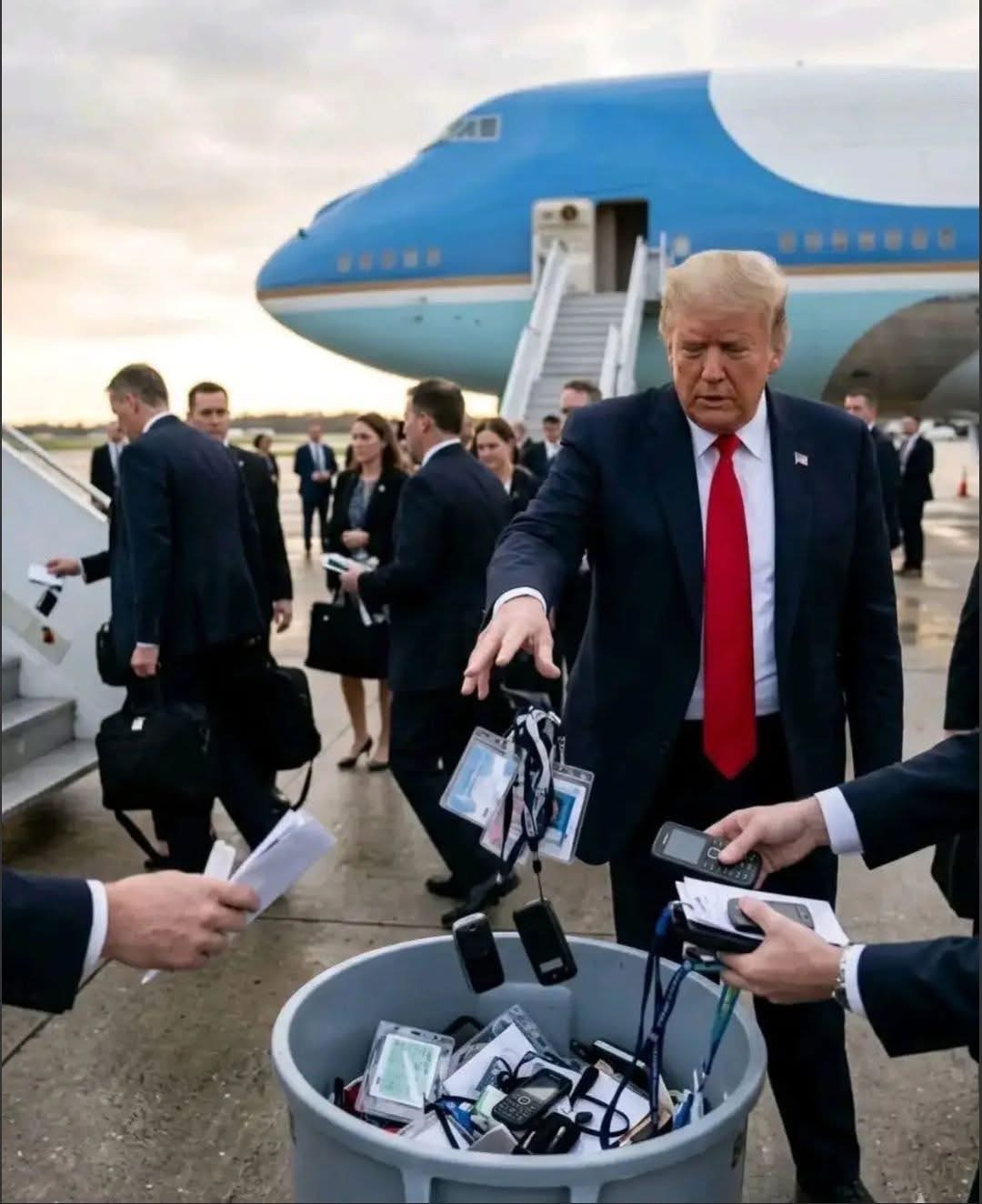
Members of former U.S. President Donald Trump’s delegation reportedly discarded temporary communication devices and official materials issued during a visit to China before boarding Air Force One, reflecting deep concerns within American security circles over cyber espionage risks.
According to reports circulating online, the discarded materials allegedly included temporary mobile phones, identification cards, electronic badges, conference credentials and lapel pins provided during official engagements with Chinese authorities.
The move reportedly occurred near the base of the aircraft stairs shortly before the American delegation departed China.
Sources familiar with high-level diplomatic security procedures said the delegation relied heavily on “burner phones” throughout the trip instead of personal or official government devices.
The temporary devices were reportedly used to minimise the risk of hacking, malware installation, data extraction and electronic surveillance during the visit.
Officials were also said to have stored their primary communication devices inside Faraday bags aboard Air Force One. Faraday bags are specially designed containers that block electromagnetic signals and prevent unauthorised remote access, tracking or interception.
Also Read: US and Nigerian forces kill ISIS global deputy Chief Abu-Bilal Al-Minuku in Africa
Cybersecurity experts have long warned that state-sponsored espionage remains a major concern during diplomatic visits involving global powers, particularly between the United States and China amid years of technological rivalry and intelligence competition.
American intelligence agencies have repeatedly accused Chinese-linked actors of conducting cyber operations targeting U.S. government institutions, corporations and critical infrastructure, allegations Beijing has consistently denied.
Security protocols involving disposable devices, restricted communications and signal-blocking equipment are common during sensitive international diplomatic missions, especially in countries considered high-risk for surveillance activities.
The reported actions by Trump’s team have reignited online debate over the scale of distrust between Washington and Beijing despite ongoing diplomatic and economic engagements between both countries.
The development also highlights how cybersecurity has become a central component of modern diplomacy, with governments increasingly treating electronic devices as potential intelligence vulnerabilities during foreign trips.
Neither Trump nor Chinese officials had publicly commented on the viral claims as of the time of filing this report.
Stay informed and ahead of the curve! Follow The National Concord Blog Newsletter for real-time updates, breaking news, and exclusive content. Don't miss a headline – join now below!