

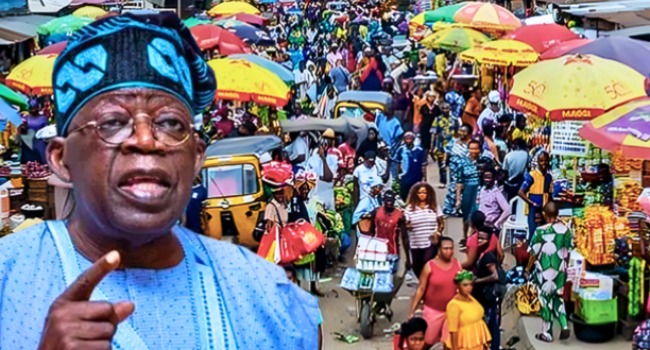
President Bola Tinubu has stirred fresh public debate after telling Nigerians grappling with worsening economic conditions to be grateful, arguing that despite the biting hardship caused by soaring fuel prices, the country remains better positioned than several of its African counterparts.
The President made the remarks on Friday during a working visit to Bayelsa State, where he commissioned a number of projects. Addressing the mounting concerns of citizens over the deteriorating economy, Tinubu acknowledged the pain but stopped short of offering immediate relief measures.
“I hear you from various angles of the economy. The fuel price is biting hard, but look around, let’s just thank God together that you are better off,” the President said while addressing the crowd.
Tinubu drew a comparison between Nigeria’s economic situation and what he described as similar or worse conditions in other parts of the continent. “Listen to them in Kenya, in other African countries, what they are going through. We will not look back. We will continue to find ways to ameliorate the suffering of the vulnerable. This is a government that cares,” he added.
The President attributed the current economic strain largely to global factors, including ongoing geopolitical tensions in the Middle East, particularly the conflict involving the United States, Israel, and Iran, which has significantly disrupted international energy markets.
“I am glad the Head of Service is here. Look at the numbers with the finance, economic planning, and budgeting, and we will see what we can do to ease the burden. But that is the development; the burden of it is what we are facing today. The challenge of the war we didn’t call for, but the effect of the interrelated world that we share. Both the joy and pain of it are universal,” Tinubu stated.
Since assuming office in May 2023, the Tinubu administration has implemented a series of sweeping economic reforms, most notably the removal of the long-standing petrol subsidy and the floating of the naira. While the government has consistently maintained that the reforms are necessary for long-term fiscal stability, their immediate impact has been severe, triggering a sharp surge in the cost of living and a significant erosion of purchasing power for millions of Nigerians.
Petrol prices in Nigeria have now climbed to over ₦1,200 per litre, a dramatic increase from the subsidised rate of under ₦200 per litre that was in place before the Tinubu administration assumed power. The consequences have cascaded across virtually every sector of the economy, driving up the prices of food, transportation, and basic goods.
The President’s comments are likely to draw sharp reactions from Nigerians, many of whom have expressed deep frustration over what they perceive as a disconnect between the government’s messaging and the daily realities on the ground. For a population already stretched thin by inflation and unemployment, the call to “thank God” may land as tone-deaf rather than reassuring.
As political pressure mounts ahead of 2027, the Tinubu administration faces the difficult task of translating its economic reform narrative into tangible relief that ordinary Nigerians can feel in their pockets.
Stay informed and ahead of the curve! Follow The National Concord Blog Newsletter for real-time updates, breaking news, and exclusive content. Don't miss a headline – join now below!